
Galle
Your complete travel guide to Galle, Sri Lanka - discover the best things to do, where to stay, and how to get there.
About Galle
Galle is a historic city on the southwestern tip of Sri Lanka, home to one of the best-preserved colonial-era forts in all of Asia. The Galle Fort — a UNESCO World Heritage Site — was first built by the Portuguese in 1588 and extensively fortified by the Dutch from 1649 onward. With its dramatic ramparts, iconic lighthouse, and centuries-old churches and mosques standing side by side, Galle Fort is a living monument to Sri Lanka's multicultural colonial history and one of the top tourist attractions in the country.
Today, Galle is a vibrant blend of history, culture, and coastal living. The fort's narrow cobblestone streets are lined with boutique hotels, artisan cafes, contemporary art galleries, and beautifully restored colonial architecture. A sunset walk along the ramparts — past Flag Rock where Dutch soldiers once signaled approaching ships — is one of the most memorable experiences in Sri Lanka. The annual Galle Literary Festival, held every January, draws international authors and artists, adding a creative cultural dimension to this charming city.
Beyond the fort walls, Galle serves as the perfect gateway to Sri Lanka's stunning southern coast. Unawatuna Beach is just a 5-minute drive away, while the hidden cove of Jungle Beach offers world-class snorkeling. Day trips to Mirissa for blue whale watching, Koggala to see traditional stilt fishermen, and the turtle hatcheries along the coast make Galle an ideal base for exploring everything the south has to offer.
Best Time to Visit
December to April - The dry season offers the best weather for exploring the fort, walking the ramparts, and enjoying nearby beaches. The southwest monsoon brings heavy rain from May to September, though the fort retains its charm even in drizzle. December through February is peak tourist season with the highest hotel prices. The Galle Literary Festival in January adds a cultural highlight. For fewer crowds and good weather, March and April are excellent choices.
Quick Facts
Best Time
December - April
Min. Days
1-2 days
From Colombo
2-3 hours
Known For
Dutch Fort, beaches, boutiques
UNESCO Status
World Heritage Site (1988)
Fort Area
36 hectares
Things to Do in Galle
Galle Fort Walking Tour
The entire Galle Fort is a UNESCO World Heritage Site first built by the Portuguese in 1588 and massively expanded by the Dutch from 1649. A self-guided walking tour through the fort takes you past centuries-old ramparts, the iconic lighthouse, the clock tower, Dutch colonial government buildings, and charming streets lined with boutique shops, galleries, and cafes. The fort is one of the best-preserved European fortifications in South and Southeast Asia, with 14 bastions, a moat, and walls up to 8 meters thick. About 400 families still live within the fort walls, giving it a living, breathing atmosphere unlike any museum.
Tip: Start at the Main Gate (Old Gate) and walk clockwise along the ramparts. Early morning or late afternoon offers the best light for photography and cooler temperatures. Pick up a free map from any hotel or shop inside the fort.
Galle Fort Lighthouse
The iconic white lighthouse standing 26.5 meters tall at the southeastern tip of the fort, first built by the British in 1848 and rebuilt in 1939. It is the oldest light station in Sri Lanka and one of the most photographed landmarks in the country. The lighthouse sits on the Utrecht Bastion with sweeping views of the Indian Ocean on three sides. While visitors cannot enter the lighthouse, the surrounding area is one of the most scenic spots in the entire fort.
Tip: Visit at golden hour (late afternoon) for the best photographs. The area around the lighthouse is also a popular spot for wedding photography and Instagram shots. The adjacent rampart walk toward Flag Rock offers dramatic coastal views.
Flag Rock
A dramatic rocky promontory at the southernmost point of the fort, where Dutch soldiers once raised flags to warn ships of the dangerous coastline. Today, Flag Rock is one of the most popular sunset gathering spots in Galle, with locals and tourists sitting along the ramparts to watch the sun sink into the Indian Ocean. Adventurous locals can sometimes be seen cliff jumping into the sea below. The flat rocks provide a perfect natural viewing platform with unobstructed 180-degree ocean views.
Tip: Arrive at least 30 minutes before sunset to secure a good spot. The walk from the lighthouse to Flag Rock along the southern ramparts is one of the most scenic stretches in the fort.
Fort Ramparts Sunset Walk
Walk along the ancient fortification walls for panoramic views of the Indian Ocean, the lighthouse, and the red-roofed colonial buildings below. The ramparts stretch for about 1.5 km around the fort and offer some of the most dramatic sunset views in Sri Lanka. The best section runs from the lighthouse along the southern wall to Flag Rock and then up to the Clock Tower. As the sun sets, locals gather on the grassy areas inside the walls for cricket games, creating a quintessentially Sri Lankan scene.
Tip: The entire rampart circuit takes about 30-40 minutes at a leisurely pace. The western ramparts between Flag Rock and the Clock Tower face the sunset directly. Watch for the dramatic wave action against the rocks below during high tide.
Dutch Reformed Church (Groote Kerk)
Built in 1755, this is the oldest Protestant church in Sri Lanka and one of the finest examples of Dutch colonial ecclesiastical architecture in Asia. The church features its original pipe organ, ornate Dutch gravestones embedded in the floor, and a pulpit carved from tropical hardwood. The interior is bright and airy with high arched windows. The church floor is paved with tombstones of Dutch settlers, some dating back to the early 1700s, each elaborately carved with coats of arms and inscriptions.
Tip: The church is still used for Sunday services. Visit on a weekday for a quiet exploration. The gravestones on the floor are fascinating — bring a flashlight to read the older inscriptions.
All Saints Church
A beautiful Anglican church built in 1871 in the English Gothic Revival style, standing as a testament to the British colonial period in Galle. The church features stunning stained-glass windows, a timber-framed roof, and stone walls that contrast with the predominantly Dutch architecture of the fort. It remains an active place of worship and offers a peaceful retreat from the busy fort streets.
Tip: Located on Church Street, it pairs well with a visit to the nearby Dutch Reformed Church for a comparison of colonial architectural styles.
Meeran Jumma Mosque
A striking white mosque located inside the fort walls, showcasing the religious diversity that has defined Galle for centuries. Originally built in 1750, the mosque blends Moorish and Victorian architectural styles with a distinctive minaret visible from the ramparts. The mosque sits on the site of a former Portuguese church and represents the long history of Muslim traders who settled in Galle. It stands as a powerful symbol of the multicultural coexistence that makes Galle Fort unique.
Tip: Dress modestly when visiting. The exterior architecture is best appreciated from the rampart walkway above. The mosque is located on Church Street — the fact that a mosque and two churches coexist on the same street reflects Galle's multicultural heritage.
National Maritime Museum
Housed in a beautifully restored Dutch colonial warehouse near the Old Gate, the National Maritime Museum chronicles Sri Lanka's rich maritime history from ancient times through the colonial era. Exhibits include traditional fishing boat models, navigation instruments, coral and shell displays, whale skeletons, and artifacts recovered from shipwrecks along the southern coast. The museum building itself — with its thick Dutch-era walls and heavy timber beams — is worth seeing.
Tip: A good option for the rare rainy day in Galle. The museum is compact and can be explored in about 45 minutes. The shipwreck artifacts are the highlight.
Historical Mansion Museum
A private museum inside a restored Dutch colonial mansion packed with antiques, colonial-era artifacts, jewelry, lace, and curiosities collected over generations. The building itself is a beautifully preserved example of Dutch domestic architecture with original wooden beams, tile floors, and a central courtyard. The museum also includes a gem gallery and traditional lace-making demonstrations.
Tip: Located on Leyn Baan Street. The owner is often present and happy to share stories about the collection. A hidden gem that most tourists walk past.
Unawatuna Beach
A beautiful crescent-shaped beach just 5 km (a 10-minute drive) from Galle Fort, consistently rated among the best beaches in Sri Lanka. The bay is sheltered by a reef, making the water calm and ideal for swimming and snorkeling. The beach is lined with restaurants, bars, and guesthouses, creating a lively atmosphere. Snorkeling gear can be rented on the beach to explore the coral reef just offshore, where you can spot tropical fish, sea turtles, and occasionally small reef sharks.
Tip: The beach gets busy by mid-morning. The western end near the rocks is quieter. Snorkel gear rental costs about Rs. 500 per hour. Sea turtles are frequently spotted in the shallow waters near the reef. Visit the nearby Japanese Peace Pagoda for sunset views over the beach.
Jungle Beach
A stunning hidden cove accessible by a short 10-minute jungle trail from the road near Unawatuna, or by a rocky coastal path from Unawatuna Beach. The crystal-clear turquoise waters, surrounded by jungle-covered rocks, make this one of the best snorkeling spots on the southern coast. The beach is small and intimate — a stark contrast to the busier Unawatuna. Colorful coral formations and abundant marine life, including sea turtles, are visible just meters from the shore.
Tip: Arrive before 10 AM to beat the crowds and secure a spot on the small beach. Bring your own snorkeling gear or rent it at Unawatuna. There is a small restaurant on the beach for drinks and snacks. The jungle trail can be slippery after rain — wear appropriate footwear.
Japanese Peace Pagoda (Rumassala)
A serene white Buddhist stupa perched on Rumassala Hill overlooking Unawatuna Beach and the Indian Ocean. Built by Japanese monks as a symbol of world peace, the pagoda features four golden Buddha statues facing the cardinal directions. The hilltop location offers breathtaking panoramic views of the coastline, making it one of the best sunset viewpoints near Galle. Rumassala Hill itself is steeped in legend — it is said to be a fragment of the Himalayas dropped by Hanuman in the Hindu epic Ramayana.
Tip: Visit around 5 PM for golden-hour light and sunset views. The pagoda is about a 15-minute tuk tuk ride from Galle Fort. Combine with a visit to Jungle Beach or Unawatuna for a perfect half-day itinerary.
Koggala Stilt Fishermen
One of Sri Lanka's most iconic images — local fishermen perched on wooden stilts planted in the shallow coastal waters, casting their lines by hand. This traditional fishing method, practiced for generations along the southern coast near Koggala (15 km from Galle), is unique to Sri Lanka. While the practice has declined, fishermen still take to their stilts, particularly in the early morning and late afternoon. The sight against the backdrop of the Indian Ocean is unforgettable.
Tip: Visit early morning (6-7 AM) or late afternoon (4-5 PM) for the best chance of seeing active fishermen. The stretch between Koggala and Ahangama is the best spot. Be respectful and ask permission before photographing — many fishermen now pose for tourists and expect a tip.
Galle Literary Festival (January)
One of Asia's leading literary festivals, held annually in late January within the atmospheric setting of Galle Fort. The festival features readings, panel discussions, and workshops by international and Sri Lankan authors, poets, and journalists. Past speakers have included Nobel laureates and Booker Prize winners. Events are held in heritage venues throughout the fort, including boutique hotels and the Dutch Reformed Church, creating an intimate cultural experience unlike any other literary festival in the world.
Tip: Book accommodation well in advance as the fort fills up during the festival. Many events are free. Check the festival website for the program and ticketed events. The festival atmosphere transforms the fort into a buzzing cultural hub.
Whale Watching from Mirissa (Day Trip)
Mirissa, just 40 km southeast of Galle, is one of the best places in the world for blue whale watching. From November to April, the deep waters off Mirissa's coast attract blue whales (the largest animals on Earth), sperm whales, fin whales, and pods of spinner dolphins. Early-morning boat trips (departing around 6:30 AM) head 10-15 km offshore for 4-5 hour excursions with high sighting rates during peak season. This makes for an unforgettable day trip from Galle.
Tip: Book with a responsible operator that follows whale-watching guidelines. The season runs November to April with January to March being peak. Take seasickness medication if prone — the waters can be rough. Bring sunscreen, a hat, and binoculars.
Koggala Sea Turtle Hatchery
Several turtle conservation hatcheries along the coast near Koggala (15 km from Galle) rescue sea turtle eggs from beaches, protect them until hatching, and release the babies into the ocean. Visitors can see several species of sea turtles at various life stages, learn about conservation efforts, and during hatching season (April to September) may even help release baby turtles into the sea at sunset. The hatcheries play a vital role in protecting Sri Lanka's endangered sea turtle populations.
Tip: Visit in the late afternoon for the best chance of seeing a baby turtle release. Several hatcheries operate along the Galle-Matara road — the more established ones near Koggala and Habaraduwa are recommended. Ask about evening releases during nesting season.
Getting to Galle
By Train
Scenic coastal train from Colombo Fort. The route hugs the coastline for stunning ocean views.
By Bus
Express buses from Colombo Central Bus Station. A/C buses available.
By Taxi/Car
Via the Southern Expressway for the fastest route.
Getting Around Galle
The Galle Fort area is best explored on foot — it is compact and entirely pedestrian-friendly, taking about 30-45 minutes to walk from end to end. For trips outside the fort to nearby beaches like Unawatuna (5 km) or Jungle Beach, tuk tuks are readily available. PickMe and Uber work well in Galle for fair, metered pricing. To explore further along the southern coast toward Mirissa or Koggala, hiring a tuk tuk for a half-day or taking the coastal train are both excellent options.
Where to Stay in Galle
Hostels & Budget
- Fort Inn$
Mid-Range Hotels
- A Tuk Tuk Hotel$$
Boutique Hotels
- Fort Bazaar$$$
- The Bartizan$$$
Luxury Hotels
- Amangalla$$$$
- $$$$
- $$$$
- Jetwing Lighthouse$$$
Where to Eat in Galle
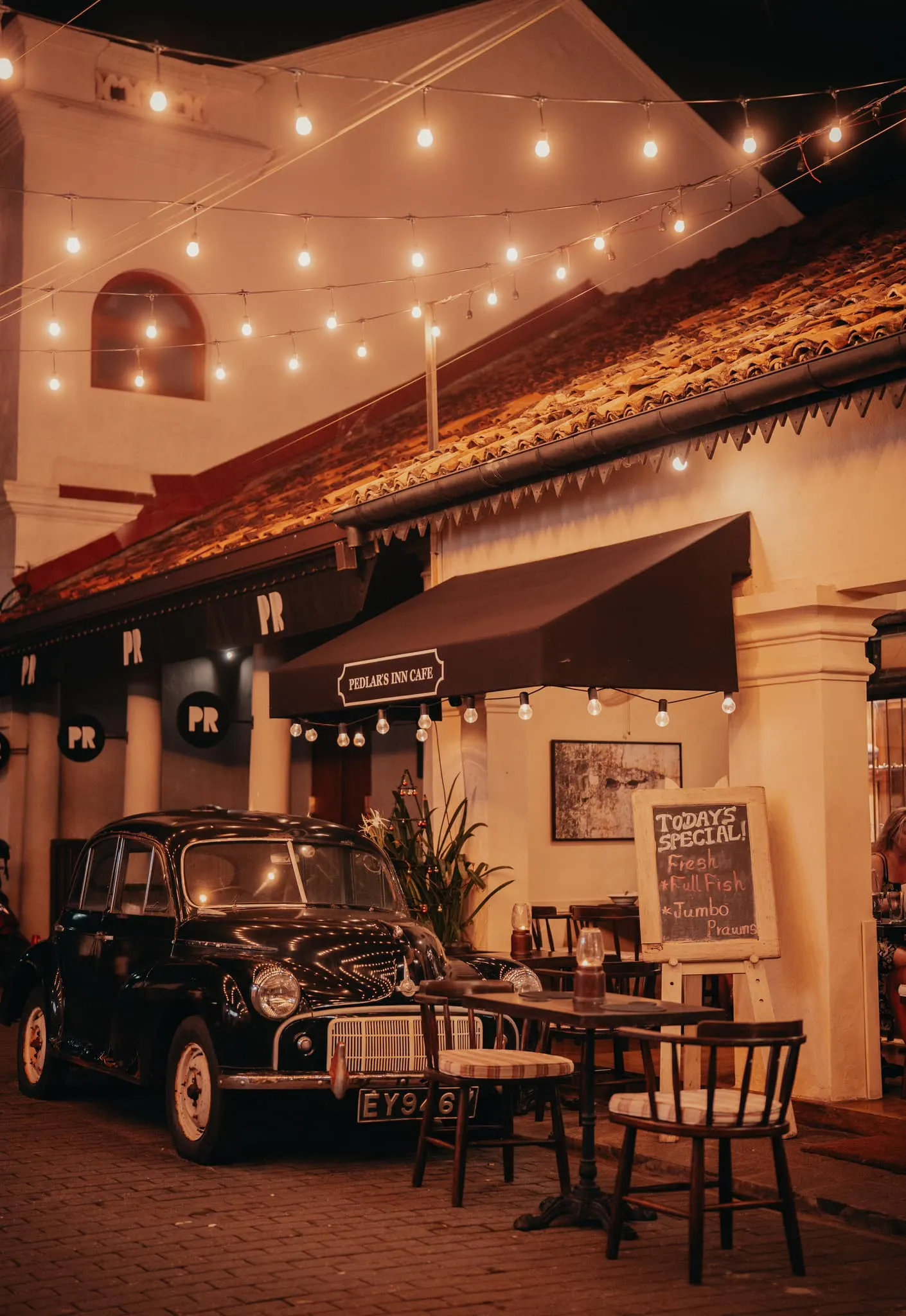
- Pedlar's Inn Cafe(International)$$
- Poonie's Kitchen(Sri Lankan)$$
- Church Street Social(Fusion)$$
- Lucky Fort Restaurant(Local)$
- Amangalla Restaurant(Fine Dining)$$$$
Galle FAQs
How many days do I need in Galle?
1-2 days is enough to thoroughly explore Galle Fort and the nearby beaches. If you want to take day trips along the southern coast — to Mirissa for whale watching, Koggala for stilt fishermen, or the turtle hatcheries — plan 3-4 days using Galle as your base.
Is Galle Fort worth visiting?
Absolutely. Galle Fort is one of the best-preserved colonial forts in all of Asia and a UNESCO World Heritage Site. The combination of centuries-old Dutch and Portuguese architecture, boutique shops, artisan cafes, the iconic lighthouse, and sunset walks along the ramparts makes it one of the most atmospheric destinations in Sri Lanka.
What are the best things to do in Galle?
The top things to do include walking the fort ramparts at sunset, visiting the lighthouse and Flag Rock, exploring the boutique shops and cafes inside the fort, visiting the Dutch Reformed Church and Meeran Jumma Mosque, relaxing at Unawatuna Beach (5 minutes away), snorkeling at Jungle Beach, and taking day trips to see stilt fishermen at Koggala or whale watching in Mirissa.
Can I walk around Galle Fort?
Yes, and walking is the best way to explore. The fort is compact and entirely pedestrian-friendly. Walking the ramparts takes about 30-40 minutes, while exploring the interior streets, shops, churches, and galleries takes 2-3 hours. A complete self-guided walking tour covers about 3-4 km.
What is the best beach near Galle?
Unawatuna Beach is the closest and most popular, just 5 km (10 minutes by tuk tuk) from Galle Fort. It offers calm swimming waters, snorkeling on the reef, and beachfront restaurants. For a quieter, more secluded option, Jungle Beach is a stunning hidden cove accessible by a short jungle trail near Unawatuna — it is one of the best snorkeling spots on the southern coast.
What are the top Galle tourist attractions?
The top tourist attractions in Galle are the UNESCO-listed Galle Fort, the Galle Fort Lighthouse, Flag Rock for sunset views, the Fort Ramparts walk, the Dutch Reformed Church, the National Maritime Museum, Unawatuna Beach, Jungle Beach, and the Japanese Peace Pagoda. Nearby attractions include the Koggala stilt fishermen and the sea turtle hatcheries.
How do I get from Colombo to Galle?
The most scenic route is the coastal train from Colombo Fort (2.5-3 hours), which hugs the shoreline with stunning ocean views. The fastest option is a taxi via the Southern Expressway (2-2.5 hours). A/C express buses from Colombo Central Bus Station take 3-4 hours and are the most affordable option.
Can I go whale watching from Galle?
Yes, Mirissa — one of the world's top blue whale watching destinations — is just 40 km from Galle (about 1 hour by road). During the season (November to April, peak in January-March), early morning boat trips depart from Mirissa harbor for 4-5 hour excursions with excellent chances of spotting blue whales, sperm whales, and spinner dolphins.
What is the Galle Literary Festival?
The Galle Literary Festival is one of Asia's most prestigious literary events, held annually in late January inside the historic Galle Fort. It features readings, panel discussions, and workshops by international authors, poets, and journalists. Events take place in atmospheric heritage venues throughout the fort. Some events are free, while others require tickets.
Is Galle safe for tourists?
Yes, Galle is one of the safest tourist destinations in Sri Lanka. The fort area is well-lit, heavily visited, and very safe to walk around at any time of day or evening. Standard travel precautions apply — keep valuables secure and be aware of your surroundings, especially on quieter beaches.
External Resources
Learn more about Galle from these authoritative sources: