
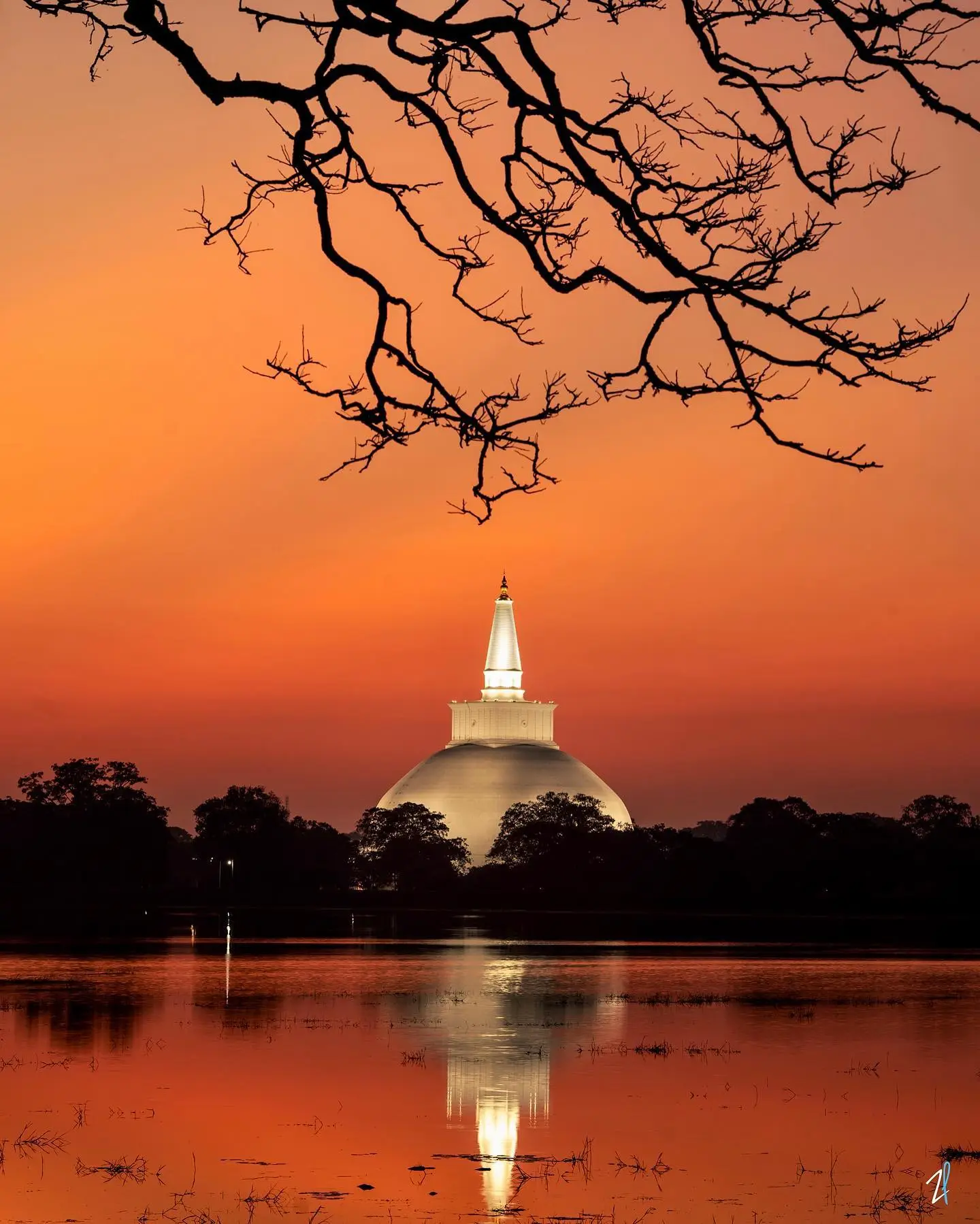
Anuradhapura
Your complete travel guide to Anuradhapura, Sri Lanka - discover the best things to do, where to stay, and how to get there.
About Anuradhapura
Anuradhapura is one of the ancient capitals of Sri Lanka and a UNESCO World Heritage Site that served as the center of Theravada Buddhism for over 1,300 years. Founded in the 4th century BC, the Sacred City was the political and religious capital of the island and remains one of the most revered pilgrimage destinations for Buddhists worldwide. Whether you are drawn to ancient ruins, spiritual experiences, or cycling through a landscape dotted with towering dagobas, Anuradhapura offers an unforgettable journey into Sri Lanka's deep past.
The sprawling Sacred City contains remarkably well-preserved ruins of palaces, monasteries, and some of the world's oldest religious structures. Massive dagobas (stupas) such as Ruwanwelisaya, Jetavanaramaya, and Abhayagiri dominate the skyline, while the Sri Maha Bodhi — grown from a cutting of the tree under which Buddha attained enlightenment — continues to draw pilgrims from around the world. Just 12 km away, Mihintale marks the very spot where Buddhism was introduced to the island, making it an essential day trip from Anuradhapura.
Anuradhapura sits within Sri Lanka's Cultural Triangle alongside Sigiriya and Polonnaruwa, and many travelers combine all three ancient cities into a single itinerary. The city is best explored by bicycle, allowing you to cover the vast distances between ruins at your own pace while soaking in the serene atmosphere of the sacred grounds.
Best Time to Visit
February to September - The dry season in the dry zone offers the most comfortable conditions for cycling and sightseeing. Avoid the northeast monsoon from October to January, when heavy rain can make outdoor exploration difficult. Full moon poya days bring large pilgrim crowds — beautiful to witness but expect busier sites. The Poson Poya festival in June draws hundreds of thousands of pilgrims to Mihintale and is a spectacular cultural event.
Quick Facts
Best Time
February - September
Min. Days
1-2 days
From Colombo
4-5 hours
Known For
Ancient ruins, dagobas, Sri Maha Bodhi
UNESCO Status
World Heritage Site (1982)
Elevation
81 m (266 ft)
Things to Do in Anuradhapura
Sri Maha Bodhi
The oldest historically documented tree in the world, planted in 288 BC from a cutting of the Bodhi tree in Bodh Gaya, India, under which Buddha attained enlightenment. Surrounded by gold railings and constantly tended by monks, the sacred fig tree is over 2,300 years old and remains the most venerated site in the city. Thousands of devotees visit daily, offering flowers, oil lamps, and prayers.
Tip: Visit at sunrise for a peaceful, deeply spiritual experience. Wear white or light-colored, non-revealing clothing. Photography is allowed but be respectful of worshippers. The tree is located adjacent to the Brazen Palace ruins.
Ruwanwelisaya (Ruwanweli Maha Seya)
One of the most revered stupas in the Buddhist world, built by King Dutugemunu in 140 BC. Standing at 103 meters (338 feet) with a circumference of 290 meters, it is one of the largest ancient structures in the world. The gleaming white dagoba is surrounded by an elephant wall featuring 1,900 stone elephants and is beautifully illuminated at night. The site holds special significance as it is believed to enshrine relics of the Buddha.
Tip: Visit early morning or at sunset when the stupa glows golden. The evening lighting ceremony around 6:30 PM is a beautiful spiritual experience. Walk around the stupa clockwise as is Buddhist tradition.
Jetavanaramaya
Once the tallest brick structure in the world at 122 meters (400 feet), Jetavanaramaya was built in the 3rd century by King Mahasena. At its peak, it was the third-tallest structure in the ancient world after the two Great Pyramids of Giza. The monastery complex that surrounded it housed over 3,000 monks. Though partially restored, the massive stupa still rises 71 meters and is an awe-inspiring sight. A small museum nearby displays artifacts unearthed during excavation, including a stunning gold plate and ancient coins.
Tip: Combine with the Jetavanaramaya Museum nearby for context on the excavation. The open grounds around the stupa offer great photography angles, especially in the late afternoon light.
Abhayagiri Vihara
The second-largest stupa in Sri Lanka at 75 meters, built entirely from bricks by King Valagamba in the 1st century BC. The Abhayagiri monastery complex was one of the largest Buddhist monastic institutions in the ancient world, housing up to 5,000 monks and serving as a major center of Mahayana Buddhist learning. The ruins spread over 235 hectares and include a refectory, twin ponds, and the stunning Samadhi Buddha statue. Chinese monk Faxian documented its grandeur in the 5th century AD.
Tip: This complex is less crowded than Ruwanwelisaya and offers a more contemplative atmosphere. Allow at least 1-2 hours to explore the surrounding monastery ruins.
Thuparamaya
The first stupa ever built in Sri Lanka, constructed by King Devanampiya Tissa in 247 BC after the introduction of Buddhism to the island. Said to enshrine the right collarbone of the Buddha, the bell-shaped dagoba is relatively small but historically monumental. Surrounded by stone pillars that once supported a wooden roof, Thuparamaya is the oldest visible dagoba in the world and marks the very beginning of Buddhist architecture in Sri Lanka.
Tip: A quieter site compared to the larger stupas. Visit here for a more intimate spiritual experience. The surrounding stone pillars make for beautiful photos.
Samadhi Buddha Statue
A masterfully carved 7-foot meditation Buddha sculpted from dolomite marble in the 4th century AD. The statue depicts Buddha in the dhyana mudra (meditation posture) and is widely regarded as one of the finest Buddha statues to survive from the ancient world. Indian Prime Minister Jawaharlal Nehru reportedly found solace in a photograph of this statue during his imprisonment.
Tip: Located within the Abhayagiri complex. A peaceful spot for meditation or quiet reflection. Early morning visits offer the softest light for photography.
Isurumuniya Rock Temple
A striking rock temple built in the 3rd century BC, famous for its exquisite stone carvings. The most celebrated is the "Isurumuniya Lovers" — a romantic carving of a couple believed to depict Prince Saliya and his low-caste lover Asokamala. The temple also features carvings of elephants bathing, a horse-headed figure, and a royal family. A small museum inside houses the original carvings in a well-lit display. The temple is built into a massive rock outcrop overlooking Tissa Wewa lake.
Tip: Climb to the top of the rock behind the temple for a panoramic view of Tissa Wewa. The museum inside is small but excellent — do not skip it.
Twin Ponds (Kuttam Pokuna)
Two beautifully proportioned bathing pools dating back to the 9th century, considered the finest example of ancient bathing facilities in Sri Lanka. The larger pool is 40 meters long and the smaller is 28 meters. Built for the monks of Abhayagiri monastery, they feature sophisticated hydraulic engineering including underground water filtration systems. The pools are decorated with five-headed cobra (naga) carvings and lotus motifs.
Tip: Located near the Abhayagiri complex. The symmetry and engineering of these ancient pools are remarkable — take time to appreciate the water management system that still partially functions.
Moonstone (Sandakada Pahana) at Queen's Palace
The finest example of a moonstone carving in Sri Lanka, located at the entrance to the ancient Queen's Palace. These ornate semi-circular stone carvings depict the cycle of life through concentric bands of flames, animals (elephant, horse, lion, bull), creeping vines, and a lotus center. The Queen's Palace moonstone is the most complete and best-preserved, with incredibly detailed carvings that showcase the artistic mastery of ancient Sinhalese craftsmen.
Tip: Moonstone carvings are found at many temple entrances throughout Anuradhapura, but this one at the Queen's Palace is the finest. Look for the four animals representing birth, decay, disease, and death.
Brazen Palace (Lovamahapaya)
The ruins of a magnificent nine-story residential palace built for monks by King Dutugemunu in the 2nd century BC. Originally roofed with bronze tiles (hence "Brazen"), the palace had 1,000 rooms across nine stories. Today, 1,600 stone pillars standing in a perfect grid are all that remain, but they powerfully evoke the scale and ambition of ancient Sinhalese architecture. The site lies between the Sri Maha Bodhi and Ruwanwelisaya.
Tip: Best viewed early morning when the rows of pillars cast long shadows. Located conveniently between the Bodhi tree and Ruwanwelisaya, so visit all three together.
Anuradhapura Archaeological Museum
A well-curated museum housing artifacts from the ancient city, including stone sculptures, bronze figurines, ancient coins, jewelry, and pottery. The museum provides essential context for understanding the ruins and helps visitors appreciate the scale of civilization that once thrived here. The Jetavanaramaya Museum nearby focuses specifically on finds from that site.
Tip: Visit the museum first to gain context before exploring the ruins. The scale models of the ancient city are particularly helpful for understanding the layout.
Cycling the Ancient City
Renting a bicycle is the most popular and enjoyable way to explore the vast Sacred City of Anuradhapura. The flat terrain and shaded roads connecting the ancient sites make it ideal cycling territory. A typical cycling route covers 20-25 km and takes in all the major dagobas, the Bodhi tree, the twin ponds, Isurumuniya, and the lakeside paths along Tissa Wewa and Nuwara Wewa. Many guesthouses rent bicycles, or you can hire one near the main entrance to the sacred zone.
Tip: Start early (6-7 AM) to beat the heat. Carry at least 2 liters of water. The route is mostly flat with paved roads. Follow the well-marked cycling paths through the sacred zone. Stop at the small shops along the route for king coconut water to stay hydrated.
Mihintale — Cradle of Buddhism
The sacred mountain where Buddhism was introduced to Sri Lanka in 247 BC, located 12 km east of Anuradhapura. According to the Mahavamsa chronicle, King Devanampiya Tissa met the Indian monk Mahinda (son of Emperor Ashoka) on this hilltop, leading to the establishment of Buddhism on the island. Climb 1,840 granite steps to the summit where you will find ancient stupas, a hospital ruin, meditation caves, and the Aradhana Gala rock offering sweeping 360-degree panoramic views of the surrounding jungle. The site is of immense spiritual importance and is the focal point of the Poson Poya celebrations in June.
Tip: Visit early morning to avoid the intense heat on the exposed stone steps. Remove footwear before entering sacred areas. Bring water — there are no shops on the climb. The Poson Full Moon Poya in June transforms Mihintale into a spectacular festival of lights with hundreds of thousands of pilgrims.
Tissa Wewa and Nuwara Wewa
Two ancient reservoirs built over 2,000 years ago that still provide water to the city today. Tissa Wewa, built by King Devanampiya Tissa, borders the southern edge of the sacred city and offers beautiful sunset views. Nuwara Wewa, the largest ancient reservoir in Anuradhapura, stretches along the eastern boundary and is popular for lakeside cycling. Both are engineering marvels that showcase the advanced hydraulic knowledge of ancient Sri Lankan civilization.
Tip: The bund (dam wall) of Tissa Wewa is a lovely spot for an evening walk or cycle ride at sunset. Nuwara Wewa is less visited and offers a peaceful escape from the main ruins.
Ranmasu Uyana (Gold Fish Park)
A 40-acre royal pleasure garden dating back to the 3rd century BC, located between Tissa Wewa and Isurumuniya. The park contains bathing pools, pavilion ruins, and the mysterious "Sakwala Chakraya" — an enigmatic circular carving on a rock face that some researchers believe is an ancient star map or cosmological chart. The meaning of this carving remains debated, making it one of Anuradhapura's most intriguing mysteries.
Tip: Often overlooked by tourists, this garden is a peaceful spot between Isurumuniya and Tissa Wewa. Seek out the Sakwala Chakraya carving — ask locals to point it out as it is not prominently signposted.
Getting to Anuradhapura
By Train
Direct trains from Colombo Fort. A comfortable journey through the countryside.
By Bus
Regular buses from Colombo Central Bus Station. A/C buses available.
By Taxi/Car
Often combined with visits to Sigiriya or other Cultural Triangle sites.
Getting Around Anuradhapura
The sacred city is spread over a vast area of roughly 40 square kilometers, making transport essential. The most popular option is hiring a bicycle for the day (Rs. 500-800) — the flat terrain and shaded roads make cycling the ideal way to explore at your own pace. Alternatively, hire a tuk tuk for a half or full day (Rs. 3,000-5,000) to cover more ground with a local driver who can double as a guide. Walking is possible between nearby clusters of ruins, but the midday heat in the dry zone makes it impractical for covering all the major sites.
Where to Stay in Anuradhapura
Hostels & Budget
- Milano Tourist Rest$
Mid-Range Hotels
- Palm Garden Village$$
- Rajarata Hotel$$
- Nuwara Wewa Rest House$$
Luxury Hotels
- Ulagalla by Uga Escapes$$$$
Where to Eat in Anuradhapura
- Salgado Hotel(Local)$
- Casserole Restaurant(Sri Lankan)$
- Randiya Restaurant(Local)$
- Hotel Grand Tourist Holiday Resort(International)$$
Anuradhapura FAQs
How many days do I need in Anuradhapura?
1-2 days is ideal. A full day with a bicycle allows you to cover the major stupas (Ruwanwelisaya, Jetavanaramaya, Abhayagiri), the Sri Maha Bodhi, and the Twin Ponds. Add a second day to visit Mihintale, explore the museums, and see the lesser-known sites like Ranmasu Uyana and Isurumuniya at a relaxed pace.
What are the top things to do in Anuradhapura?
The must-do activities include visiting the Sri Maha Bodhi (the world's oldest documented tree), exploring the three great dagobas (Ruwanwelisaya, Jetavanaramaya, and Abhayagiri), cycling through the Sacred City, seeing the Twin Ponds and the Samadhi Buddha statue, and taking a half-day trip to Mihintale — the birthplace of Buddhism in Sri Lanka.
What should I wear when visiting Anuradhapura?
Dress conservatively — cover shoulders and knees at all religious sites. White or light-colored clothing is preferred (and traditional for temple visits) but not mandatory. You must remove shoes before entering temple grounds and sacred areas. Carry a pair of socks to protect your feet from hot ground during midday.
Can I combine Anuradhapura with Sigiriya?
Yes, and most travelers do. Anuradhapura and Sigiriya are about 80 km apart and both form part of Sri Lanka's Cultural Triangle. You can comfortably visit both in 2-3 days, often with Dambulla Cave Temple as a stop in between.
Is it very hot in Anuradhapura?
Yes, Anuradhapura is in the dry zone and temperatures regularly exceed 35 degrees Celsius (95 degrees Fahrenheit), especially from March to August. Start sightseeing early in the morning (before 8 AM), take a break during the midday heat (11 AM to 2 PM), and carry at least 2 liters of water. If cycling, the shaded roads between sites offer some relief.
Is cycling the best way to explore Anuradhapura?
Yes, cycling is the most popular and recommended way to explore the ancient city. The Sacred City covers roughly 40 square kilometers with flat terrain and shaded roads connecting the ruins. Bicycles can be rented from guesthouses or shops near the sacred zone for Rs. 500-800 per day. A full cycling circuit of all major sites takes 4-6 hours.
What is the entrance fee for Anuradhapura?
There is a central ticket (approximately USD 25) for the Sacred City archaeological zone, which covers most major sites. However, many individual religious sites like Ruwanwelisaya and Sri Maha Bodhi are free to enter as active places of worship. Isurumuniya charges a small separate fee (Rs. 200), and Mihintale has its own ticket (Rs. 500).
How do I get from Colombo to Anuradhapura?
You can reach Anuradhapura from Colombo by train (4-5 hours, direct service from Colombo Fort), A/C intercity bus (4-5 hours from Colombo Central Bus Station), or private taxi (about 4 hours). Many travelers visit Anuradhapura as part of a Cultural Triangle circuit that also includes Sigiriya and Polonnaruwa.
What is Mihintale and is it worth visiting from Anuradhapura?
Mihintale is the sacred mountain 12 km east of Anuradhapura where Buddhism was introduced to Sri Lanka in 247 BC. It is absolutely worth visiting — climb the 1,840 granite steps to ancient stupas and panoramic views. Allow 2-3 hours for the visit. It is especially spectacular during the Poson Full Moon Poya in June when hundreds of thousands of pilgrims gather.
What are the best places to visit in Anuradhapura?
The top places to visit include the Sri Maha Bodhi, Ruwanwelisaya stupa, Jetavanaramaya, Abhayagiri Vihara, Thuparamaya (the first stupa in Sri Lanka), Twin Ponds, the Samadhi Buddha statue, Isurumuniya rock temple, and the Brazen Palace ruins. For a day trip, Mihintale is unmissable.
External Resources
Learn more about Anuradhapura from these authoritative sources: