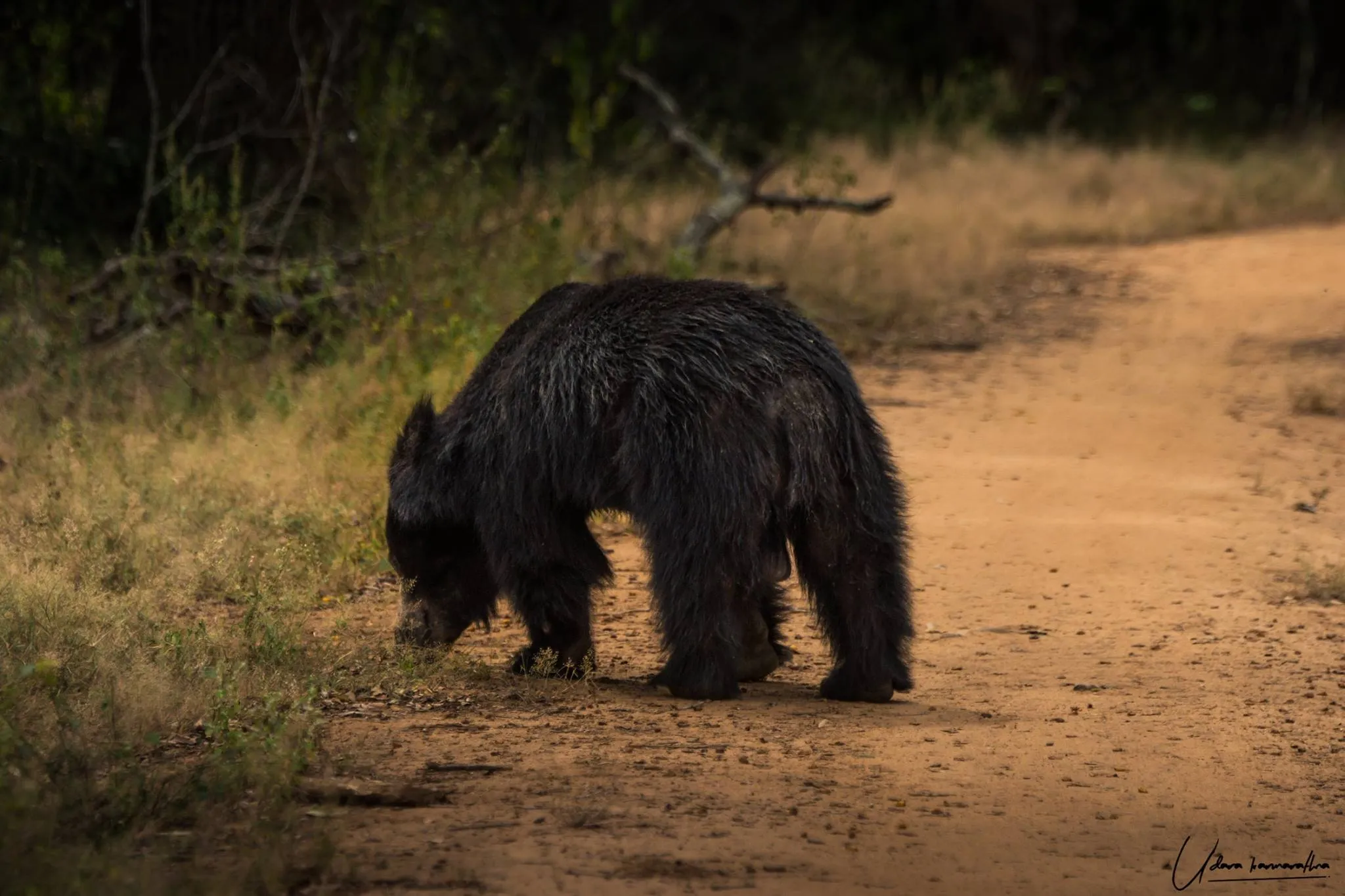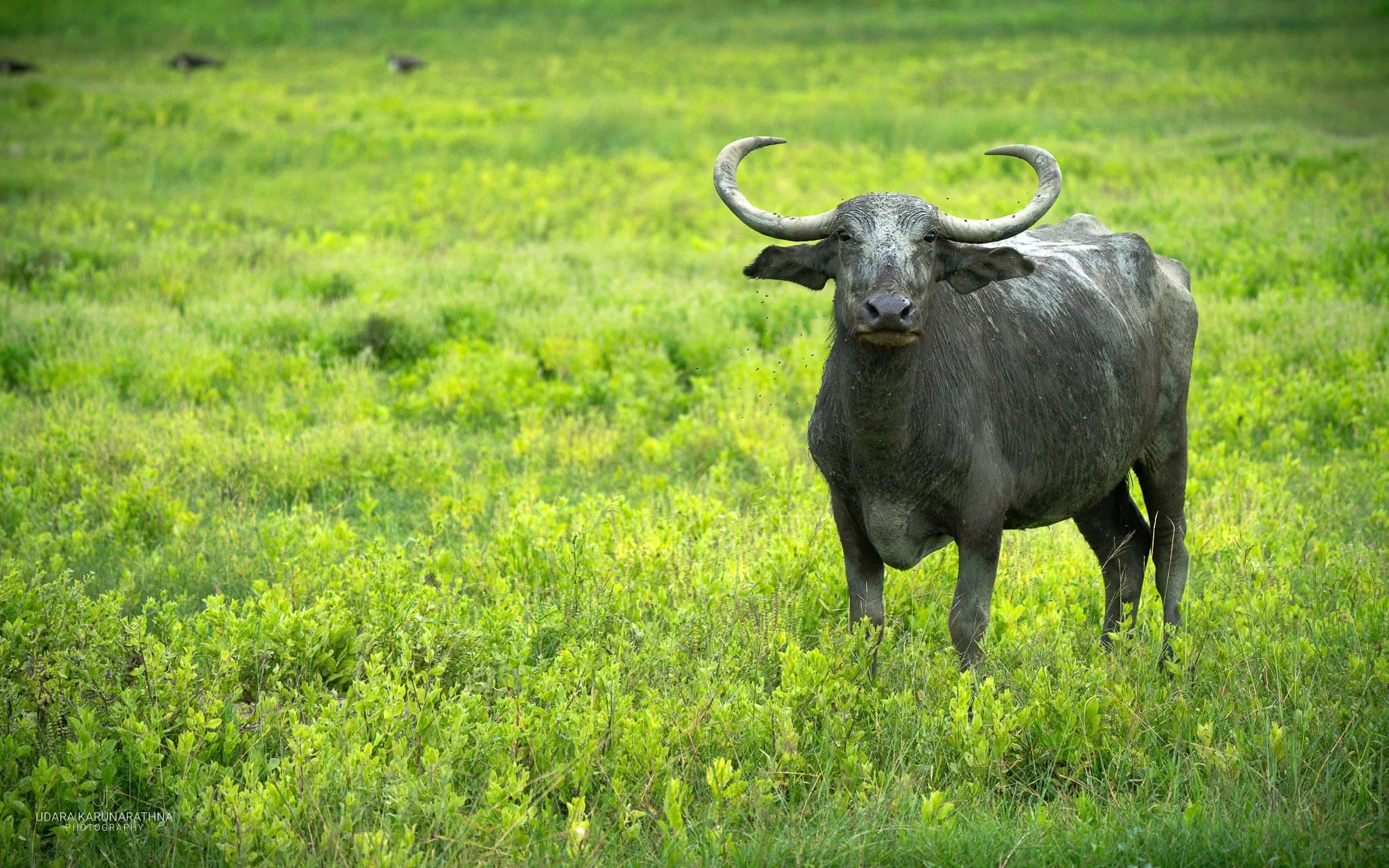
Wild Water Buffalo Sri Lanka
Up to 1.9 metersOver 1 meter

Wild Water Buffalo Sri Lanka

The wild water buffalo (Bubalus arnee) is one of Sri Lanka's most impressive yet often overlooked large mammals. Standing up to 1.9 meters at the shoulder with massive curved horns that can span over a meter, these powerful animals are among the largest bovines in Asia. Sri Lanka's wild water buffalo population, found primarily in the dry zone national parks and marshlands, represents one of the few remaining genetically pure wild populations, as many mainland Asian populations have been diluted through interbreeding with domestic water buffalo.

Yala National Park and Bundala National Park on the southeastern coast are the most reliable locations for observing wild water buffalo in their natural habitat. At Yala, herds are commonly seen grazing on the open grasslands and wallowing in muddy waterholes, particularly during the dry season when they congregate around permanent water sources. Bundala's network of lagoons and wetlands provides ideal habitat, and buffalo are a regular sight alongside the park's famous flamingos and painted storks. Kumana National Park on the east coast also harbors healthy populations.

While they may not command the same attention as leopards and elephants, wild water buffalo play a crucial ecological role in maintaining the grassland ecosystems of Sri Lanka's dry zone parks. Their grazing patterns help shape the landscape, creating habitat for numerous other species. For visitors on safari, encountering a herd of these magnificent animals, with their imposing horns and watchful eyes, is a powerful reminder of the wild diversity that Sri Lanka's national parks protect.
Where to See

Yala National Park

high

Large herds frequent the grasslands and waterholes of Yala, particularly in Blocks 1 and 2. Often seen alongside elephants and deer during morning game drives.

national park

Bundala National Park

high

The wetland habitats of Bundala are ideal for water buffalo. Herds are commonly seen wallowing in the shallow lagoons alongside migratory waterbirds.

national park

Kumana National Park

moderate

Buffalo inhabit the grasslands and mangrove edges of Kumana. The park sees fewer visitors, allowing for more undisturbed wildlife viewing.

national park

Minneriya National Park

moderate

Small herds of wild buffalo are occasionally spotted around the edges of Minneriya Tank, sharing the grazing grounds with elephant herds.

national park

Activities & Experiences

Yala Wildlife Safari

$50 - $120 per person

A half or full-day game drive through Yala where wild water buffalo are regularly encountered alongside leopards, elephants, and diverse birdlife on the open grasslands.

Bundala Wetland Safari

$35 - $80 per person

Explore Bundala's lagoon system where buffalo share the landscape with flamingos, pelicans, and crocodiles. A more peaceful alternative to the busier Yala.

Kumana Bird and Wildlife Safari

$40 - $90 per person

A comprehensive safari combining water buffalo sightings with Kumana's world-class birdwatching, especially during the nesting season from April to July.

Dry Zone Nature Photography Tour

$80 - $150 per person

A photography-focused safari targeting water buffalo behavior, including dramatic wallowing scenes and herds crossing golden grasslands at sunset.

Combined Yala-Bundala Multi-Park Safari

$120 - $250 per person

A two-day safari covering both Yala and Bundala national parks, providing the best chance to see buffalo across different habitats alongside diverse wildlife.

Viewing Tips

  • Wild water buffalo are best photographed at waterholes during the golden hour, when the low sunlight dramatically illuminates their massive horns.
  • Keep a safe distance from bulls, especially solitary older males, which can be territorial and aggressive toward vehicles.
  • At Bundala, scan the edges of lagoons during morning drives when buffalo descend to drink and wallow.
  • Look for cattle egrets and other birds perched on the backs of buffalo, creating classic wildlife photography compositions.
  • During the dry season, buffalo herds concentrate around permanent water sources, making sightings more predictable.

Photography Tips

  • Use a 100-400mm lens for dramatic portraits highlighting the massive curved horns against sunset skies.
  • Wallowing buffalo covered in mud make for compelling behavioral shots, especially when backlit during golden hour.
  • Include the surrounding habitat in wider shots to tell the story of the dry zone ecosystem and its seasonal changes.

Frequently Asked Questions

Are the water buffalo in Sri Lanka truly wild?

Yes, Sri Lanka's national parks are home to genetically pure wild water buffalo (Bubalus arnee), one of the few remaining wild populations in Asia. They are distinct from the domesticated water buffalo commonly seen in agricultural areas.

Where is the best place to see wild water buffalo in Sri Lanka?

Yala National Park and Bundala National Park are the most reliable locations. Yala offers sightings on open grasslands alongside other big game, while Bundala provides a wetland setting with excellent photographic opportunities.

Are wild water buffalo dangerous?

Yes, wild water buffalo are considered one of Asia's most dangerous large animals. Solitary bulls and mothers with calves can be particularly aggressive. Always view them from the safety of a safari vehicle and maintain a respectful distance.

How big do wild water buffalo get?

Wild water buffalo can stand up to 1.9 meters at the shoulder and weigh between 700 and 1,200 kg. Their massive curved horns can span over a meter, making them one of the most physically impressive animals in Sri Lanka's national parks.

What is the conservation status of wild water buffalo?

Wild water buffalo are listed as Endangered on the IUCN Red List. The main threats include habitat loss, hybridization with domestic buffalo, and disease transmission from domestic livestock. Sri Lanka's protected parks play a crucial role in their conservation.

Quick Facts

Shoulder HeightUp to 1.9 meters
Horn SpanOver 1 meter
Conservation StatusEndangered (IUCN)
Best ParksYala, Bundala
Herd Size10-30 individuals typically
Weight700-1,200 kg
Scientific NameBubalus arnee
Conservationendangered

Best Time to Visit

FebruaryMarchAprilMay

The dry season from February to May is ideal for spotting wild water buffalo. Shrinking water sources force herds to concentrate around permanent pools and lagoons, making sightings easier and more dramatic.

Best Time of Day

Early morning (6:00-9:00 AM) and late afternoon (3:30-6:00 PM) when buffalo are actively grazing and moving to water sources. During midday heat, they rest in shade or wallow in mud.

Tour Costs

Budget$30 - $50 per person (shared jeep, half-day at Bundala)
Standard$60 - $120 per person (private jeep, full-day at Yala)
Premium$150 - $300 per person (multi-park safari with expert guide)

Safety Info

  • Wild water buffalo are unpredictable and can be aggressive, especially solitary bulls. Never approach on foot and maintain a safe vehicle distance.
  • Buffalo have killed more people in Asia than any other large animal. Treat them with the same respect as elephants and leopards.
  • If a buffalo lowers its head and raises its horns, it is displaying a threat posture. Your driver should reverse the vehicle immediately.
  • Stay inside the safari vehicle at all times. Buffalo can charge at surprising speed despite their bulk.

Getting There

From Colombo

Tissamaharama (the base for both Yala and Bundala) is approximately 280 km from Colombo (5-6 hours via the Southern Expressway to Hambantota). Kumana is about 320 km from Colombo via the east coast road.

Top Location

Yala National Park

Directions

Yala and Bundala national parks are both in the southeastern corner of Sri Lanka, near the town of Tissamaharama. Kumana is further east along the coast, accessible from Arugam Bay.

Where to Stay

Chaaya Wild Yala
luxury$150 - $300 per night
Tissamaharama Lake View
mid range$40 - $80 per night
Tissa Budget Guesthouse
budget$12 - $30 per night

Explore More Wildlife