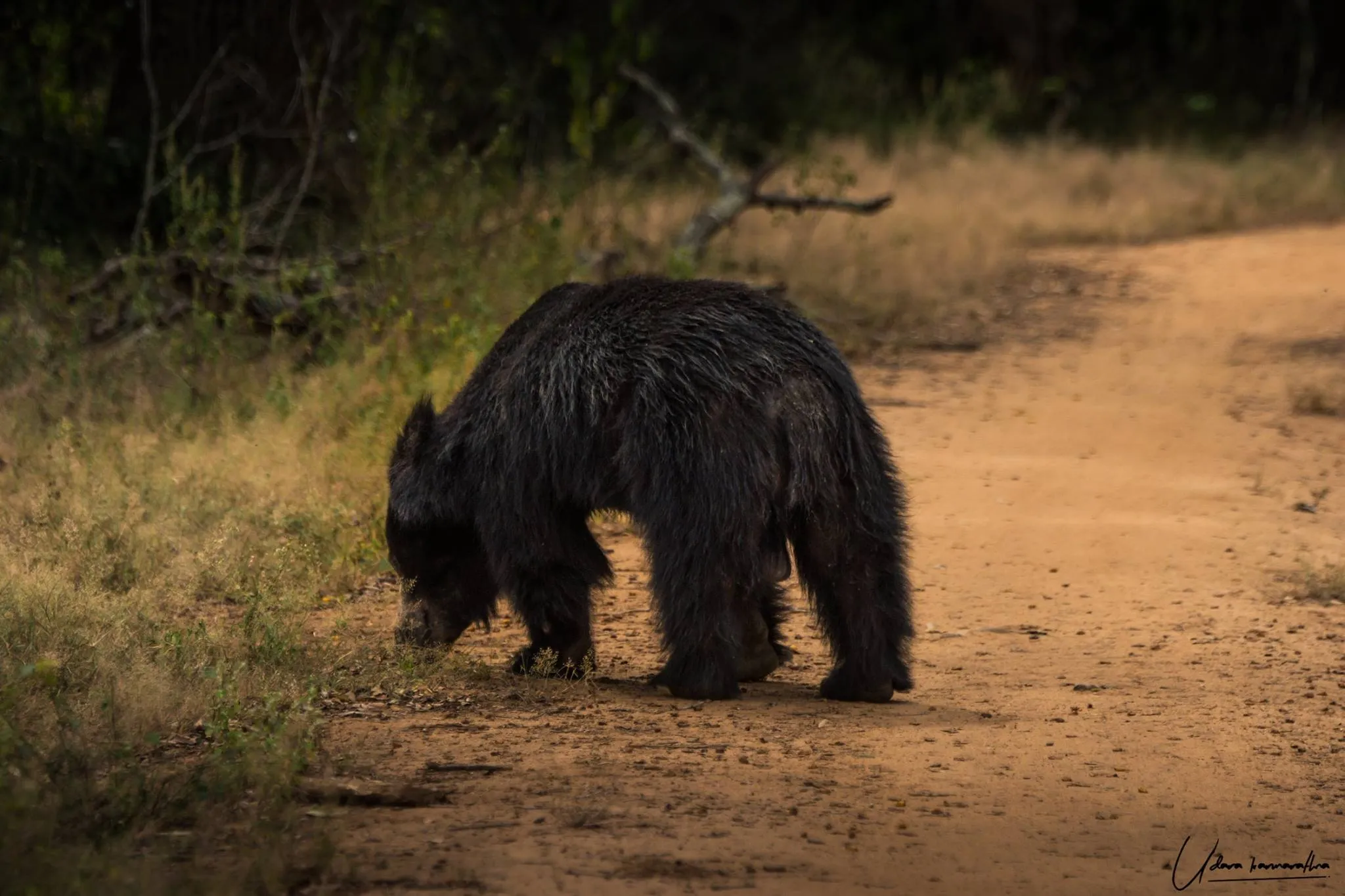
The Sri Lankan sloth bear (Melursus ursinus inornatus) is one of the island's most elusive and fascinating large mammals, a distinct subspecies of the Indian sloth bear that has adapted to the dry zone forests and scrublands of Sri Lanka over thousands of years. With their shaggy black coats, distinctive white chest patches, and elongated snouts designed for vacuum-like insect feeding, these bears cut a unique figure among the island's wildlife. Despite being relatively widespread across the dry zone, sloth bears remain one of the hardest large animals to spot due to their shy, nocturnal nature.
Wilpattu National Park in the northwest is considered the best location for sloth bear sightings in Sri Lanka. The park's vast network of natural lakes (villus) surrounded by dense forest provides ideal habitat, and early morning game drives occasionally reveal bears foraging near water sources or moving between feeding sites. Wasgamuwa National Park in the central province is another reliable location, while Yala National Park offers occasional sightings, particularly in the less-visited Block 5. The population across Sri Lanka is estimated at 500 to 1,000 individuals.
Spotting a sloth bear requires patience, persistence, and a healthy dose of luck. Unlike leopards and elephants, which can be tracked by experienced guides, sloth bears are unpredictable wanderers whose movements are largely dictated by the availability of termite mounds, fallen fruit, and honeybee nests. For dedicated wildlife enthusiasts, the challenge of finding these secretive bears adds to the thrill, making a sighting one of the most rewarding experiences a Sri Lankan safari can offer.