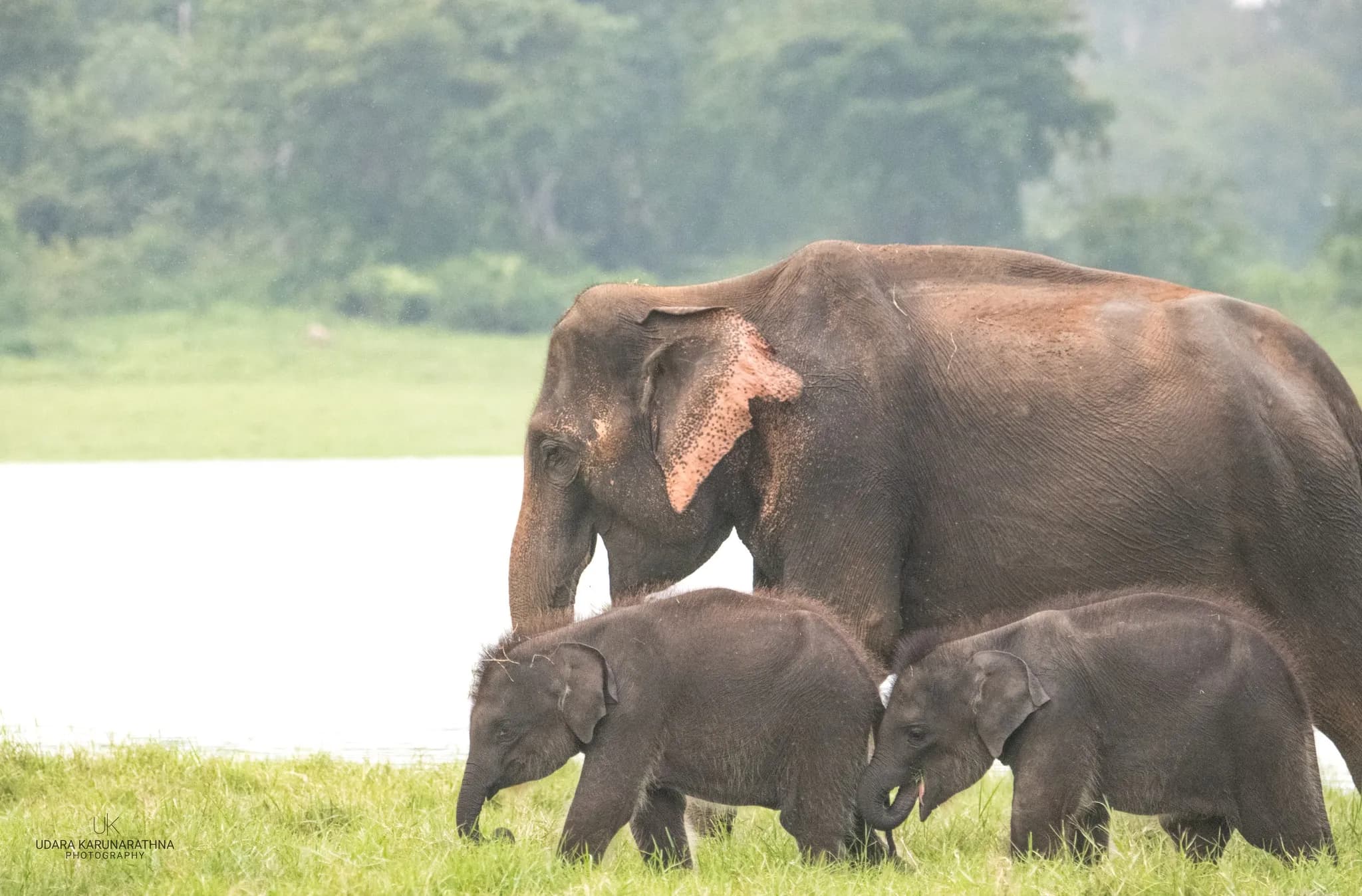
Sri Lanka Wild Elephants
6,000 - 7,000 individualsEndangered (IUCN)

Sri Lanka Wild Elephants

Sri Lanka is home to one of the largest populations of Asian elephants in the world, with an estimated 6,000 to 7,000 wild elephants roaming across the island's national parks, forests, and rural landscapes. The Sri Lankan elephant (Elephas maximus maximus) is the largest of the three recognized Asian elephant subspecies, and these gentle giants have been woven into the cultural and religious fabric of the island for over two millennia, playing central roles in Buddhist temple ceremonies and the famous Esala Perahera procession in Kandy.

Udawalawe National Park in the southern lowlands is arguably the most reliable place on Earth to see wild Asian elephants, with herds of 150 to 200 individuals residing within the park year-round. Unlike African safari destinations where sightings can be hit or miss, a visit to Udawalawe virtually guarantees multiple elephant encounters, often at remarkably close range. Minneriya National Park in the north-central dry zone hosts The Gathering, one of the greatest wildlife spectacles in Asia, when over 300 elephants converge on the receding shores of Minneriya Tank between July and October to feed on the exposed grasses.

Beyond the thrilling safari experiences, Sri Lanka offers meaningful opportunities to engage with elephant conservation. The Elephant Transit Home at Udawalawe is a government-run rehabilitation center that rescues orphaned and injured calves, raises them with minimal human contact, and releases them back into the wild. Whether you witness a massive herd crossing the dusty plains at sunset or observe a playful baby elephant taking its first steps, encountering wild elephants in Sri Lanka is a profound and unforgettable experience.
Where to See

Udawalawe National Park

very high

Home to 150-200 resident elephants year-round. Sightings are virtually guaranteed on any game drive, with herds often spotted near the reservoir and open grasslands.

national park

Minneriya National Park

very high

Famous for The Gathering from July to October, when 300+ elephants congregate around the ancient Minneriya Tank. One of Asia's greatest wildlife spectacles.

national park

Kaudulla National Park

high

Adjacent to Minneriya, Kaudulla hosts large elephant herds particularly from September to December as water levels shift. A less crowded alternative.

national park

Wasgamuwa National Park

high

A remote and rugged park with around 150 elephants. Offers an authentic off-the-beaten-path safari experience with very few other tourists.

national park

Yala National Park

high

While famous for leopards, Yala is also home to large elephant herds, particularly in Blocks 2 and 5. Elephants are frequently seen near waterholes.

national park

Activities & Experiences

Udawalawe Morning Safari

$40 - $80 per person

A half-day game drive through Udawalawe's open grasslands and reservoir shores, where large herds of elephants feed and bathe. Expect to see 50+ elephants on a typical morning drive.

Minneriya Gathering Safari

$50 - $100 per person

Witness the spectacular Elephant Gathering during the dry season (July-October) when hundreds of elephants converge around the ancient reservoir. An unmissable experience.

Elephant Transit Home Visit

LKR 500 (approximately $2)

Visit the government-run elephant orphanage at Udawalawe where rescued calves are rehabilitated with minimal human contact before being released back into the wild. Feeding times at 9 AM, 12 PM, and 3 PM.

Full-Day Combined Safari

$80 - $150 per person

A comprehensive full-day safari at Udawalawe covering both morning and afternoon game drives, maximizing wildlife encounters across different zones of the park.

Kaudulla Evening Safari

$40 - $80 per person

An afternoon drive into Kaudulla National Park, often combined with a visit to nearby ancient ruins. Large herds gather near the tank as the sun sets.

Wasgamuwa Wilderness Safari

$60 - $120 per person

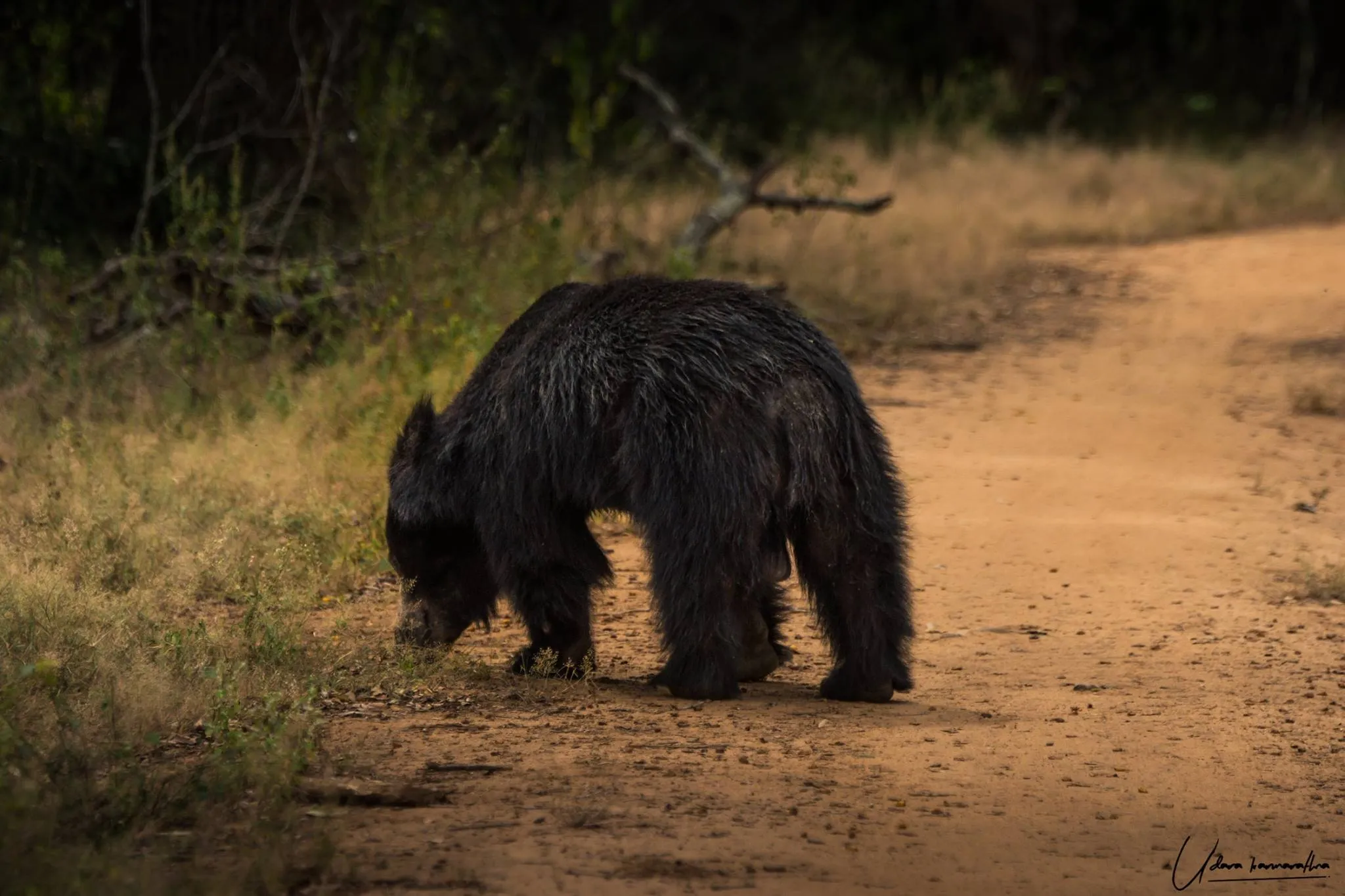
An off-the-beaten-path adventure in one of Sri Lanka's least visited parks. See elephants alongside sloth bears and rare birds with almost no other tourists around.

Viewing Tips

  • Udawalawe offers guaranteed elephant sightings any time of year. If elephants are your priority, this should be your first choice.
  • For The Gathering at Minneriya, visit between July and October. The spectacle peaks in August and September when the tank dries up most.
  • Keep a safe distance of at least 25 meters from wild elephants. Mothers with calves and solitary males (tuskers) can be particularly aggressive.
  • Watch for ear flapping, trunk raising, and mock charges as warning signs. If an elephant displays these behaviors, your driver should reverse immediately.
  • The golden hour just before sunset provides the most dramatic lighting for elephant photography at Udawalawe's open grasslands.
  • Visit on weekdays to avoid the weekend rush of domestic tourists, especially at popular parks like Minneriya and Udawalawe.

Photography Tips

  • A 70-200mm lens works well at Udawalawe where elephants often approach quite close to the vehicle. A 100-400mm gives more versatility.
  • Capture behavior rather than just portraits: bathing, mud-rolling, nursing calves, and herd dynamics make for compelling images.
  • The dust kicked up by elephant herds at Udawalawe creates dramatic backlit scenes during golden hour. Position yourself with the sun behind the herd.
  • Use a fast shutter speed (1/500s or higher) when elephants are moving, as they can shift from slow walk to mock charge in seconds.

Frequently Asked Questions

Where is the best place to see wild elephants in Sri Lanka?

Udawalawe National Park offers the most reliable elephant sightings year-round, with 150-200 resident elephants. For a spectacular seasonal experience, Minneriya National Park hosts The Gathering from July to October with 300+ elephants.

How many wild elephants are there in Sri Lanka?

Sri Lanka has an estimated 6,000 to 7,000 wild Asian elephants, making it one of the highest concentrations of Asian elephants in the world. They are found in national parks and forest reserves across the dry zone lowlands.

What is The Gathering at Minneriya?

The Gathering is an annual phenomenon from July to October when over 300 wild elephants converge on the shores of the ancient Minneriya Tank as water levels recede, exposing fresh grasses. It is considered one of the greatest wildlife spectacles in Asia.

Is the Pinnawala Elephant Orphanage worth visiting?

Pinnawala is a popular tourist attraction, but animal welfare organizations have raised concerns about the conditions. The Elephant Transit Home at Udawalawe is a better ethical choice, as it rehabilitates orphaned calves with minimal human contact and releases them back into the wild.

Do Sri Lankan elephants have tusks?

Only about 7% of male Sri Lankan elephants have tusks, which is one of the lowest rates among Asian elephant populations. This is believed to be a result of centuries of selective hunting of tusked males. Female Asian elephants do not have tusks.

How much does an elephant safari cost in Sri Lanka?

A half-day shared jeep safari at Udawalawe or Minneriya costs $35-55 per person. A private full-day safari with a dedicated guide runs $60-120 per person. Premium experiences with expert naturalists and exclusive vehicles range from $150-300 per person.

Quick Facts

Wild Population6,000 - 7,000 individuals
Conservation StatusEndangered (IUCN)
Average Weight4,000 - 5,500 kg (males)
Best Park (Year-round)Udawalawe National Park
Best Park (Seasonal)Minneriya (Jul-Oct)
Lifespan60-70 years in the wild
Tusker PercentageOnly ~7% of males have tusks
Scientific NameElephas maximus maximus
Conservationendangered

Best Time to Visit

JulyAugustSeptemberOctober

While Udawalawe offers excellent elephant viewing year-round, the absolute best time is July to October for The Gathering at Minneriya, when 300+ elephants converge on the ancient reservoir. For Udawalawe specifically, February to April provides dry weather and easy viewing across open grasslands.

Best Time of Day

Early morning (6:00-9:00 AM) and late afternoon (3:00-6:00 PM) when elephants are most active, feeding and moving to water sources. Midday hours often see elephants resting in shade.

Tour Costs

Budget$35 - $55 per person (shared jeep, half-day safari)
Standard$60 - $120 per person (private jeep, full-day safari)
Premium$150 - $300 per person (exclusive vehicle, expert naturalist guide)

Safety Info

  • Never approach a wild elephant on foot. Even seemingly calm elephants can charge without warning, especially mothers protecting calves.
  • Stay inside the safari jeep at all times while in the national park. Opening doors or standing on seats is dangerous and against park rules.
  • If an elephant approaches the vehicle, remain silent and still. Your driver and tracker know how to handle close encounters safely.
  • Do not feed elephants along roadsides outside parks. This dangerous practice leads to human-elephant conflict and road accidents.
  • Keep a minimum distance of 25 meters from elephants at all times. Use binoculars or telephoto lenses for close-up views.
  • Be especially cautious around solitary bull elephants (musth males) which can be highly aggressive and unpredictable.

Getting There

From Colombo

Udawalawe is approximately 180 km from Colombo (4-5 hours by car via the Southern Expressway). Minneriya is about 180 km northeast of Colombo (4-5 hours via Dambulla). Both parks are easily combined with cultural sites like Sigiriya and Polonnaruwa.

Top Location

Udawalawe National Park

Directions

Udawalawe National Park is in southern Sri Lanka, about 180 km from Colombo. The nearest town is Embilipitiya. Minneriya is in the Cultural Triangle area, approximately 180 km northeast of Colombo near Habarana.

Where to Stay

Grand Udawalawe Safari Resort
mid range$60 - $120 per night
Elephant Reach Hotel
mid range$50 - $90 per night
Cinnamon Lodge Habarana
luxury$150 - $300 per night
Habarana Village Budget Stay
budget$15 - $35 per night

Explore More Wildlife