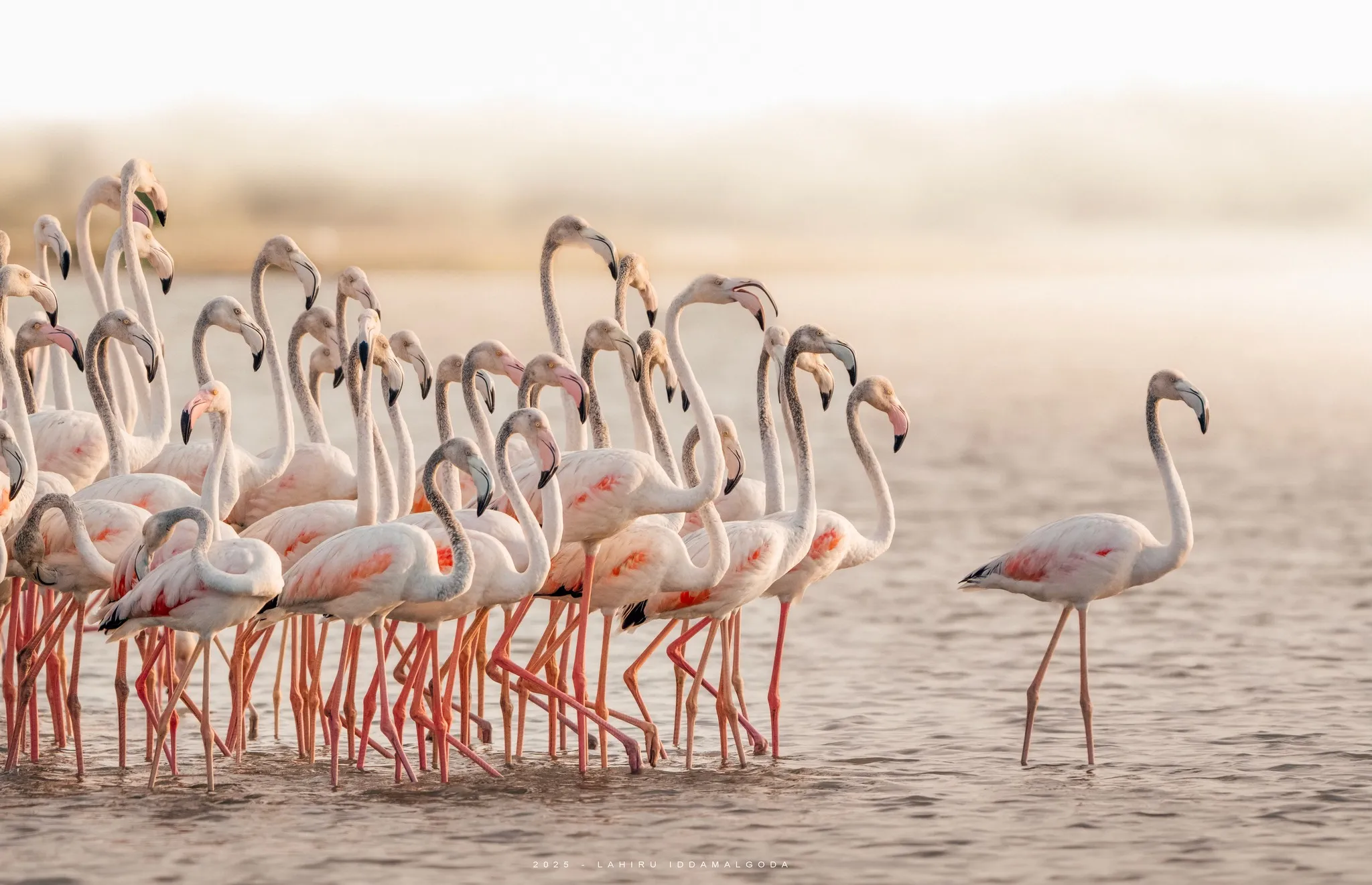
Every year between September and March, thousands of greater flamingos (Phoenicopterus roseus) migrate from their breeding grounds in the Rann of Kutch in western India to the shallow lagoons and salt pans of Sri Lanka, transforming the island's wetlands into a breathtaking spectacle of pink. These elegant wading birds, standing up to 1.5 meters tall with their characteristic curved bills and vivid pink plumage, congregate in flocks of hundreds and sometimes thousands at key wetland sites, creating scenes that rank among the most visually stunning wildlife experiences in South Asia.
Bundala National Park, a Ramsar-designated wetland on the southern coast, is the premier flamingo destination in Sri Lanka. During peak season, the park's shallow saline lagoons host flocks of 1,000 to 3,000 flamingos that feed, preen, and create a mesmerizing pink haze across the water. The Mannar Island area in the far northwest is equally spectacular, particularly the salt pans and tidal flats around Vankalai Sanctuary, where massive flamingo congregations rival those at Bundala. Kumana National Park on the east coast also attracts significant numbers during the migratory season.
Photographing flamingos against the golden light of a Sri Lankan sunset, their reflections shimmering in the still lagoon waters, is an experience that captivates both serious birders and casual nature lovers alike. The accessibility of Bundala and the relatively uncrowded conditions compared to flamingo sites in Africa or Europe make Sri Lanka an excellent and often underappreciated destination for flamingo watching.