
There is a particular kind of quiet that settles over Anuradhapura at dawn. Before the heat rises off the brick, before the buses arrive, you can walk the sacred precincts and hear nothing but the soft slap of bare feet on warm stone and the murmur of devotees in white. For over two thousand years, pilgrims have come to this ancient capital to worship at its great dagobas and beneath its sacred tree. While our complete guide to Anuradhapura covers the whole heritage city, this guide turns its attention to the heart of it all: the sacred sites, the temples and dagobas that make Anuradhapura one of the holiest places in the Buddhist world.
For Sinhala Buddhists, Anuradhapura is not a museum but a living shrine. Buddhism arrived on the island here, in the 3rd century BCE, and the faith has never left these grounds. So as you wander, remember that you are a guest in a place of active devotion. Visit gently, dress modestly, and you will be welcomed warmly.
The Great Dagobas and Sacred Sites
Ruwanwelisaya (Ruwanweli Maha Seya)
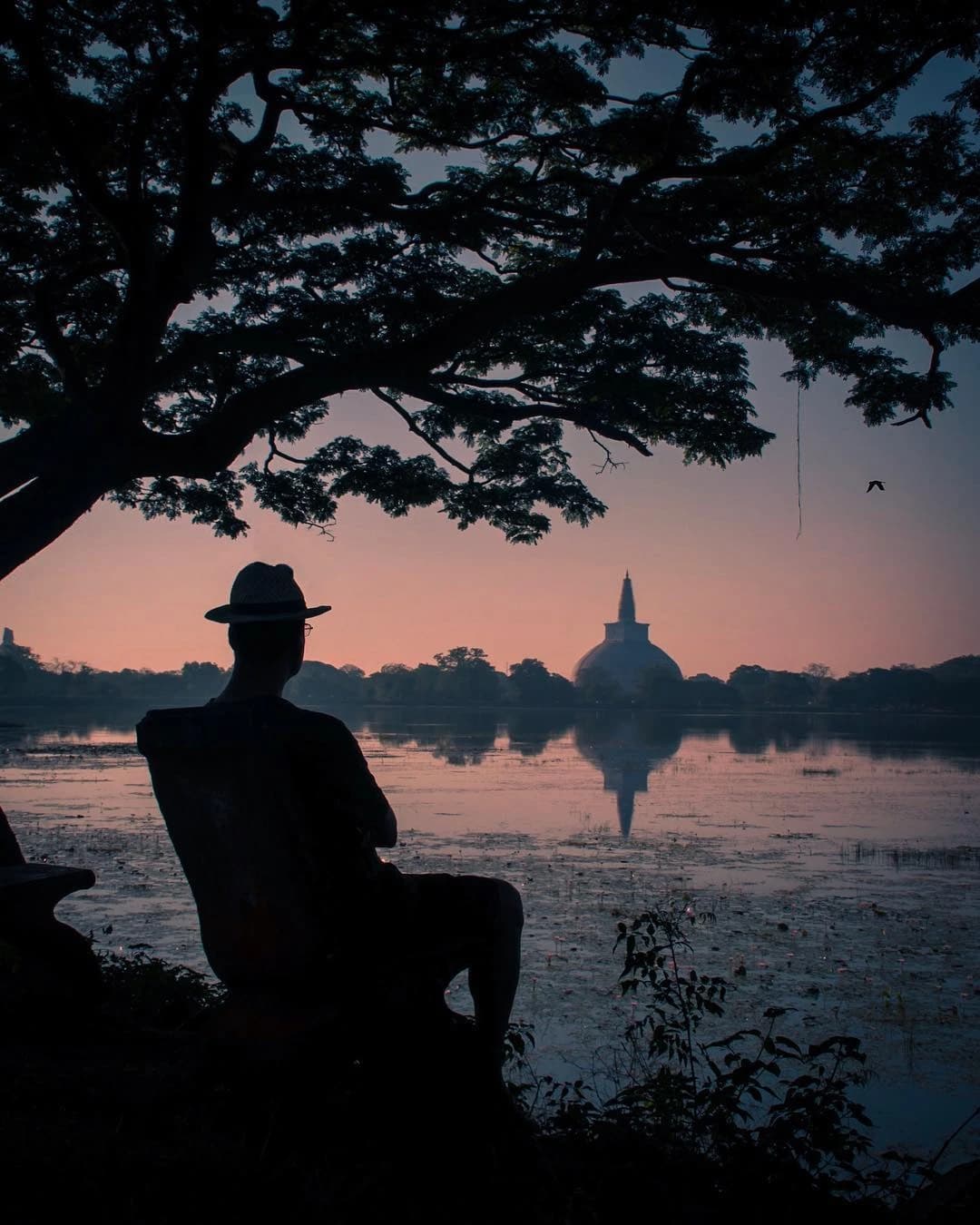
If there is one image that captures the soul of Anuradhapura, it is the gleaming white dome of Ruwanwelisaya rising above the trees. Also called the Ruwanweli Maha Seya or Maha Stupa, this dagoba was built by the hero-king Dutugemunu in the 2nd century BCE, after he united the island. Legend says the king did not live to see it finished, and his brother completed the work, draping the unfinished dome in white cloth painted to look complete so the dying king could behold his masterpiece.
The stupa is enshrined with sacred relics of the Buddha, which makes it one of the most venerated places of worship for Buddhists worldwide. After centuries of ruin and careful restoration, it stands today luminous and whole, encircled by a wall of stone elephants and thronged with worshippers carrying lotus blooms and trays of jasmine.
What to see: the great white dome itself, best admired across the waters of the Abhaya lake at golden hour; the elephant wall surrounding the platform; and the rows of devotees offering flowers and lighting oil lamps as dusk falls. Walk clockwise around the dagoba, as the faithful do, keeping it always to your right.
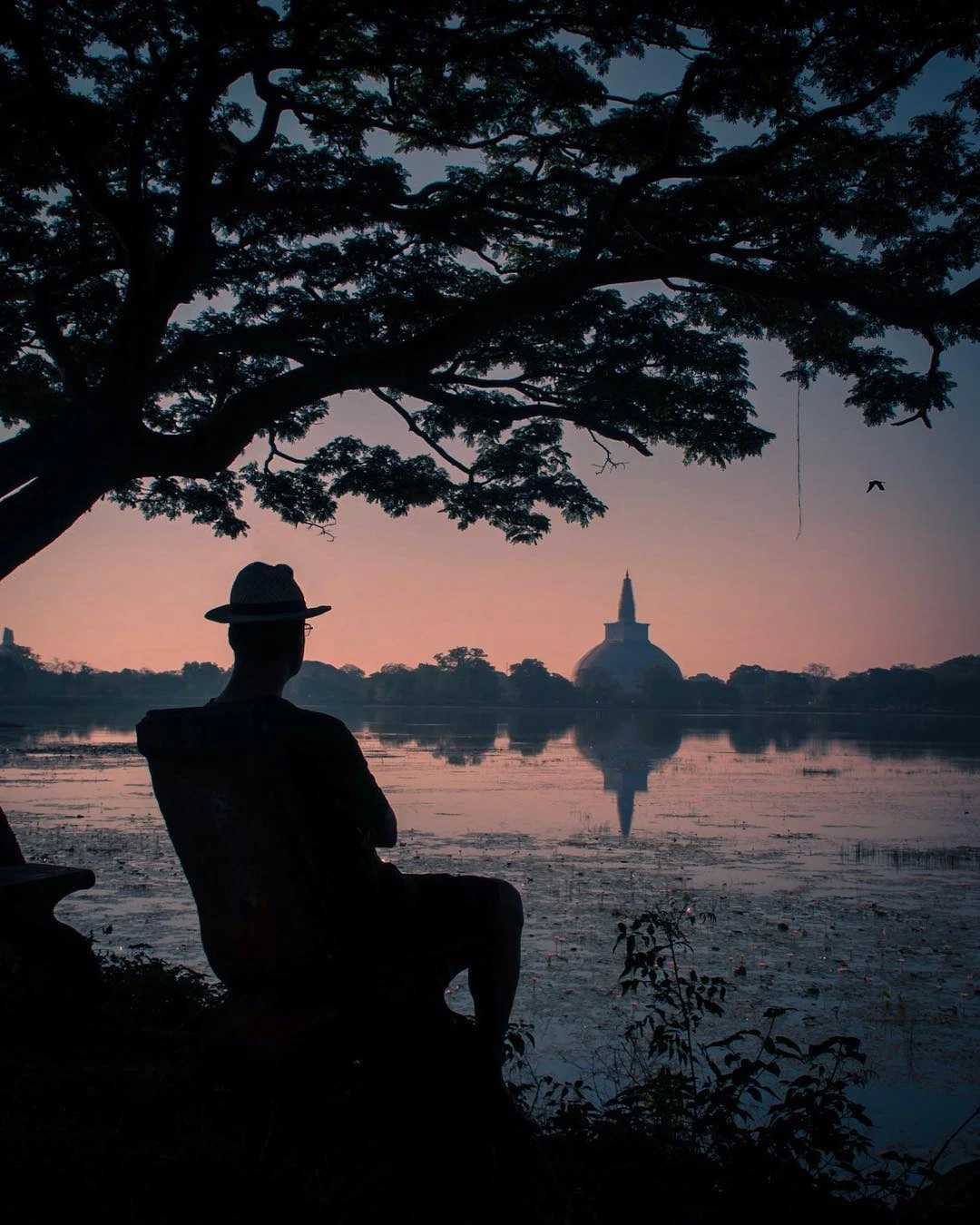 Ruwanwelisaya glowing at dusk above the sacred precinct.
Etiquette: this is among the most sacred spots in the country. White or light-coloured clothing is expected, shoulders and knees must be covered, and footwear and hats must be removed before you step onto the platform. Hush your voice and never turn your back to the dagoba for a photo.
Jaya Sri Maha Bodhi (The Sacred Bodhi Tree)
A short walk away, in the Mahamevna Gardens, stands what may be the most extraordinary living thing in Sri Lanka. The Jaya Sri Maha Bodhi is a sacred fig tree grown from a cutting of the very Bodhi tree at Bodh Gaya in India, beneath which the Buddha attained enlightenment. The sapling was brought to the island in the 3rd century BCE by the nun Sangamitta Theri, daughter of the Indian emperor Ashoka, and planted here by King Devanampiyatissa.
That makes this tree more than 2,300 years old, the oldest historically authenticated tree planted by human hands anywhere on earth. It has been tended without interruption by an unbroken line of guardians ever since, a living link to the Buddha himself.
What to see: the ancient tree itself, its sacred branches supported by golden props and ringed by a gilded fence and prayer flags. Devotees gather here at all hours to chant, meditate, and offer flowers. Arrive early and you may catch a soft sunrise filtering through the leaves while the morning chants drift across the gardens, a deeply moving moment even for non-Buddhists.
Etiquette: as one of the holiest of all sites, the same reverent dress applies. White attire is most appropriate, shoulders and knees covered, shoes and hats removed. Keep quiet and avoid pointing the soles of your feet toward the tree when you sit.
Thuparamaya (The Oldest Dagoba)
Modest in size beside its towering neighbours but immense in importance, Thuparamaya holds the title of the oldest dagoba in Sri Lanka, indeed the first stupa built on the island after Buddhism arrived. King Devanampiyatissa raised it in the 3rd century BCE, and it is believed to enshrine the sacred right collarbone relic of the Buddha.
Over the centuries Thuparamaya has been restored many times, and its shape has changed from the original paddy-heap mound to the bell form you see today. Encircling the dagoba are the tall, slender stone pillars of an ancient vatadage, a circular relic house that once sheltered the stupa beneath a wooden roof. Standing among those leaning columns, you feel the sheer depth of the centuries here.
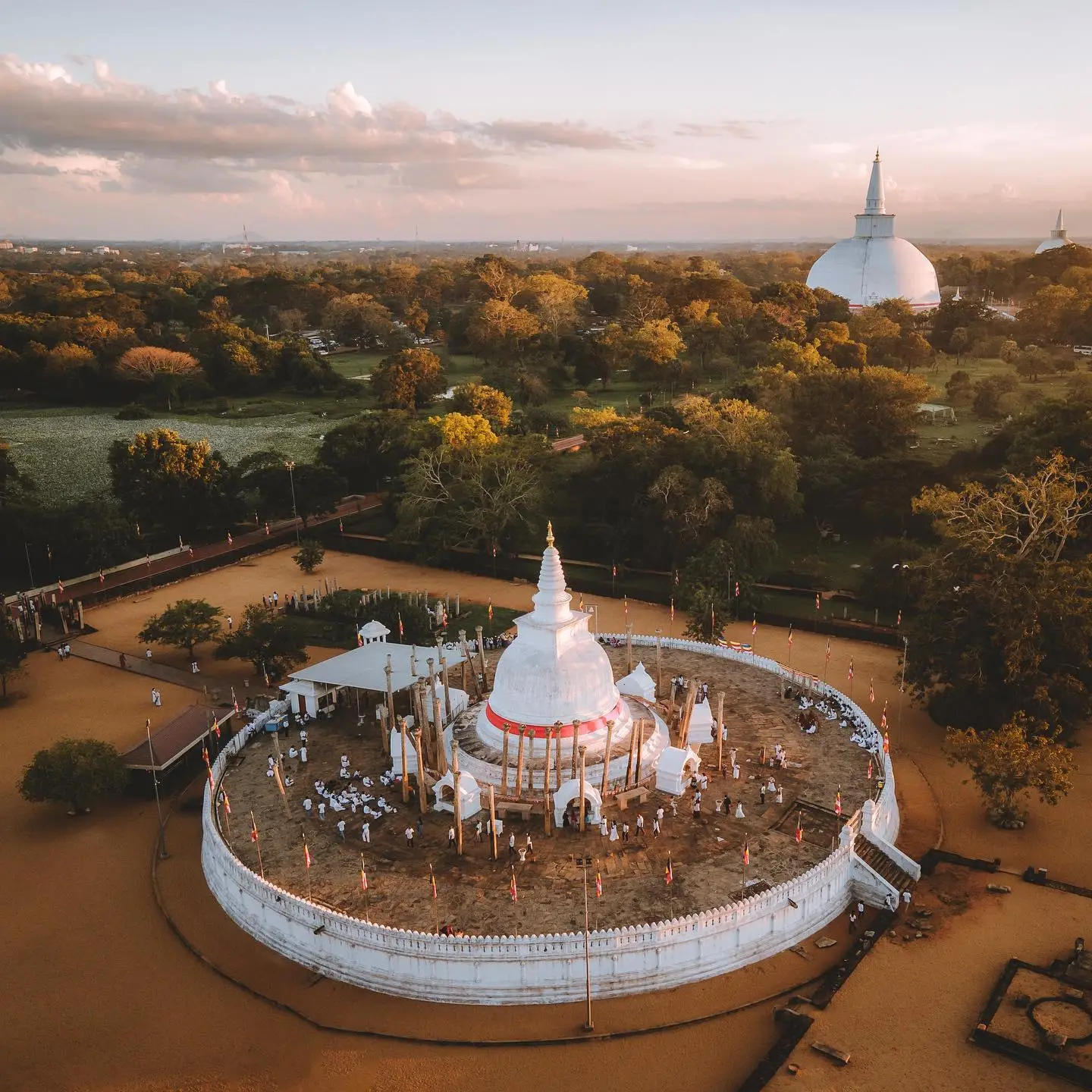 Thuparamaya, the first dagoba ever built in Sri Lanka.
What to see: the graceful white dagoba and the surrounding forest of carved stone pillars, beautiful in the low light of early morning. Etiquette here is the same as the other sacred sites: modest light clothing, bare feet on the platform, and a calm, respectful manner.
Jetavanaramaya
To the east rises Jetavanaramaya, a colossus of red brick that was once the tallest stupa in the world and, in its day, among the tallest structures anywhere, rivalled only by the great pyramids of Egypt. Built by King Mahasena in the 3rd to 4th century CE, it is said to enshrine a piece of the Buddha's sash or belt.
Unlike the whitewashed Ruwanwelisaya, much of Jetavanaramaya stands in bare brick, and the scale is staggering. An estimated ninety million bricks went into its construction. It rose at the heart of the Jetavana monastery, a great centre of learning that once housed thousands of monks.
What to see: the vast brick dome looming over the surrounding ruins, and the remains of the monastery complex at its feet. The on-site museum displays exquisite carvings and artefacts excavated here. As with all the dagobas, remove your shoes before stepping onto the platform and dress modestly.
Abhayagiri
Anuradhapura was once divided between great monastic fraternities, and Abhayagiri was the heart of one of the most influential. Founded by King Valagamba in the 1st century BCE, the Abhayagiri dagoba grew into the centre of a vast and cosmopolitan monastery that welcomed scholars and pilgrims from across Asia. The Chinese traveller Faxian stayed here in the 5th century CE and wrote of thousands of monks in residence.
The dagoba itself, built of brick, is one of the largest in the country, and the surrounding complex is rich with treasures. This northern quarter of the sacred city is wonderfully atmospheric, scattered with ponds, carved guardstones, and exquisite moonstones.
What to see: the great brick dagoba; the famous Samadhi Buddha statue nearby, carved from dolomite and seated in serene meditation; the elegant Twin Ponds (Kuttam Pokuna), an ancient bathing complex for monks; and the celebrated Abhayagiri moonstone, perhaps the finest carved threshold stone on the island. There is plenty to explore here, and you will find more ideas in our roundup of things to do in Anuradhapura.
Mihintale (Where Buddhism Began)
About twelve kilometres east of the city stands the rocky hill of Mihintale, the cradle of Buddhism in Sri Lanka. It was here, according to tradition, that the missionary monk Mahinda, son of Emperor Ashoka, met King Devanampiyatissa during a royal hunt in 247 BCE and preached the first sermon that converted the king and the island to the Buddha's teaching.
A grand stairway of some 1,840 granite steps climbs the hillside, passing dagobas, meditation caves, and the ruins of an ancient hospital and refectory along the way. At the summit, the views stretch across the green plains of the dry zone, with the white dome of the Maha Saya and the dramatic Aradhana Gala, the rock of invitation, marking the spot where Mahinda is said to have first appeared.
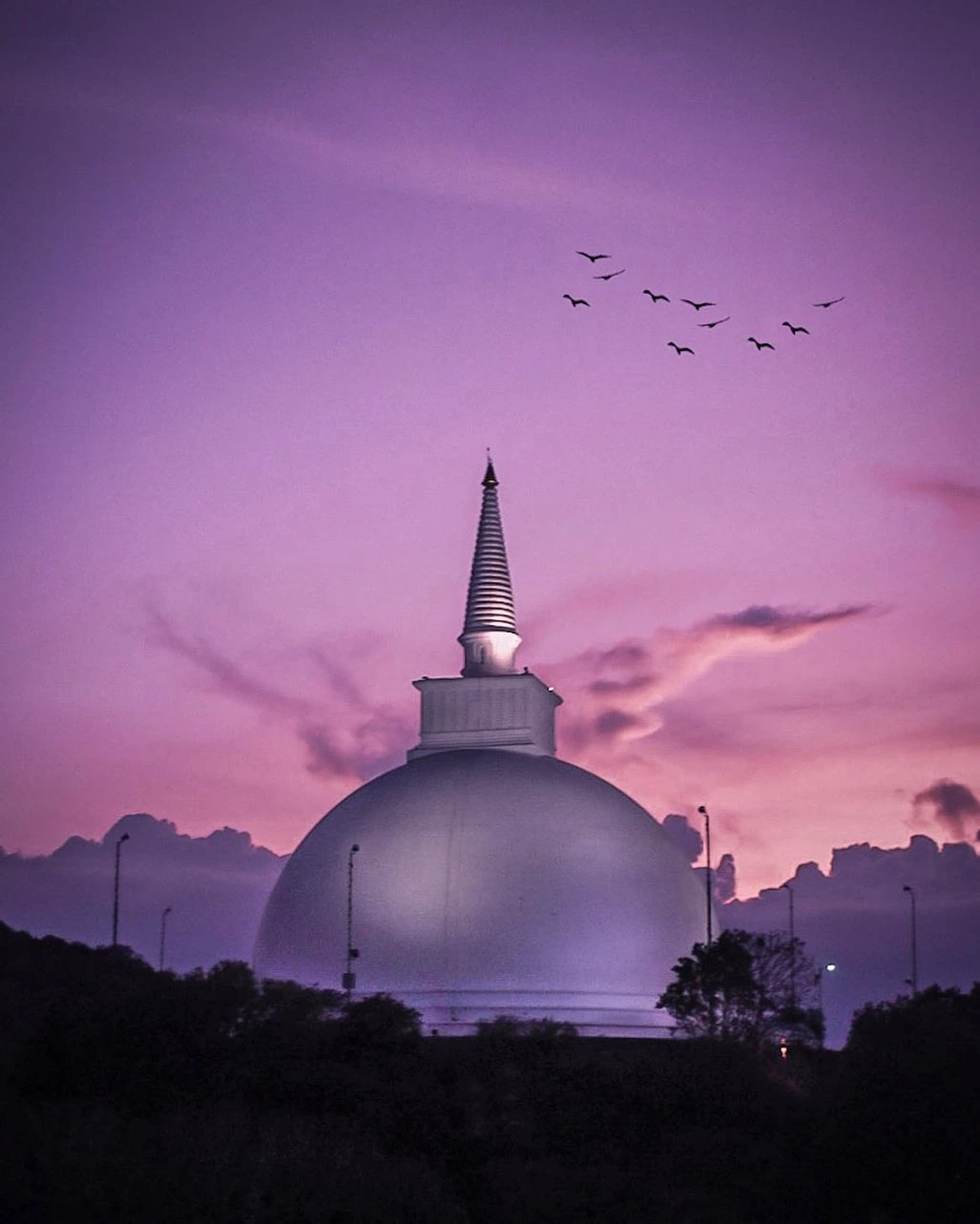 Mihintale, where Buddhism first took root on the island.
What to see: the ceremonial stairway, the summit dagobas, the cave dwellings of the early monks, and the panoramic view from the top. The climb is most rewarding in the cool of early morning. As a place of worship, modest clothing and bare feet on the upper terraces are required.
Planning Your Sacred Sites Visit
The Cultural Triangle Ticket
Most of Anuradhapura's archaeological sites fall within the Sacred City zone and are covered by the Anuradhapura Cultural Triangle ticket, the same ticketing concept that applies across the ancient cities of the region. The ticket grants access to the major ruins and monastery complexes. Happily, several of the most sacred places of worship, including Ruwanwelisaya and the Jaya Sri Maha Bodhi, are free to enter and worship, as living shrines should be. Mihintale charges a small separate entrance fee. Buy your ticket at the official ticket office near the museum, and keep it handy as it may be checked at several sites.
Best Time of Day
The dry-zone heat is no joke by midday, when the brick and stone radiate warmth and bare feet protest on sun-baked platforms. Plan your visit for early morning, soon after dawn, when the light is golden, the crowds are thin, and the air is cool. Late afternoon into dusk is the other magic hour, especially at Ruwanwelisaya, where oil lamps flicker to life as the sky turns rose and gold. Full-moon (Poya) days and weekends draw the largest crowds of pilgrims, beautiful to witness but busy, so plan accordingly.
Tips for a Respectful Visit
- Wear white or light-coloured, modest clothing. Shoulders and knees must be covered at every sacred site.
- Remove your shoes and hats before stepping onto any dagoba platform or temple ground. Socks are allowed and help on hot stone.
- Walk clockwise around dagobas and the Bodhi tree, keeping the shrine to your right.
- Never pose for photographs with your back to a Buddha statue or dagoba, and don't climb on the ruins.
- Keep your voice low and your manner calm; these are places of prayer.
- Carry water, and consider hiring a tuk-tuk to hop between the widely spaced sites in comfort.
The sacred sites of Anuradhapura reward those who slow down and visit with an open, respectful heart. Whether you come as a pilgrim or a curious traveller, the great white dome of Ruwanwelisaya at sunset and the rustle of the ancient Bodhi leaves are experiences that stay with you long after you leave. For everything else this remarkable city offers, from where to stay to how to get around, explore our full Anuradhapura destination guide.