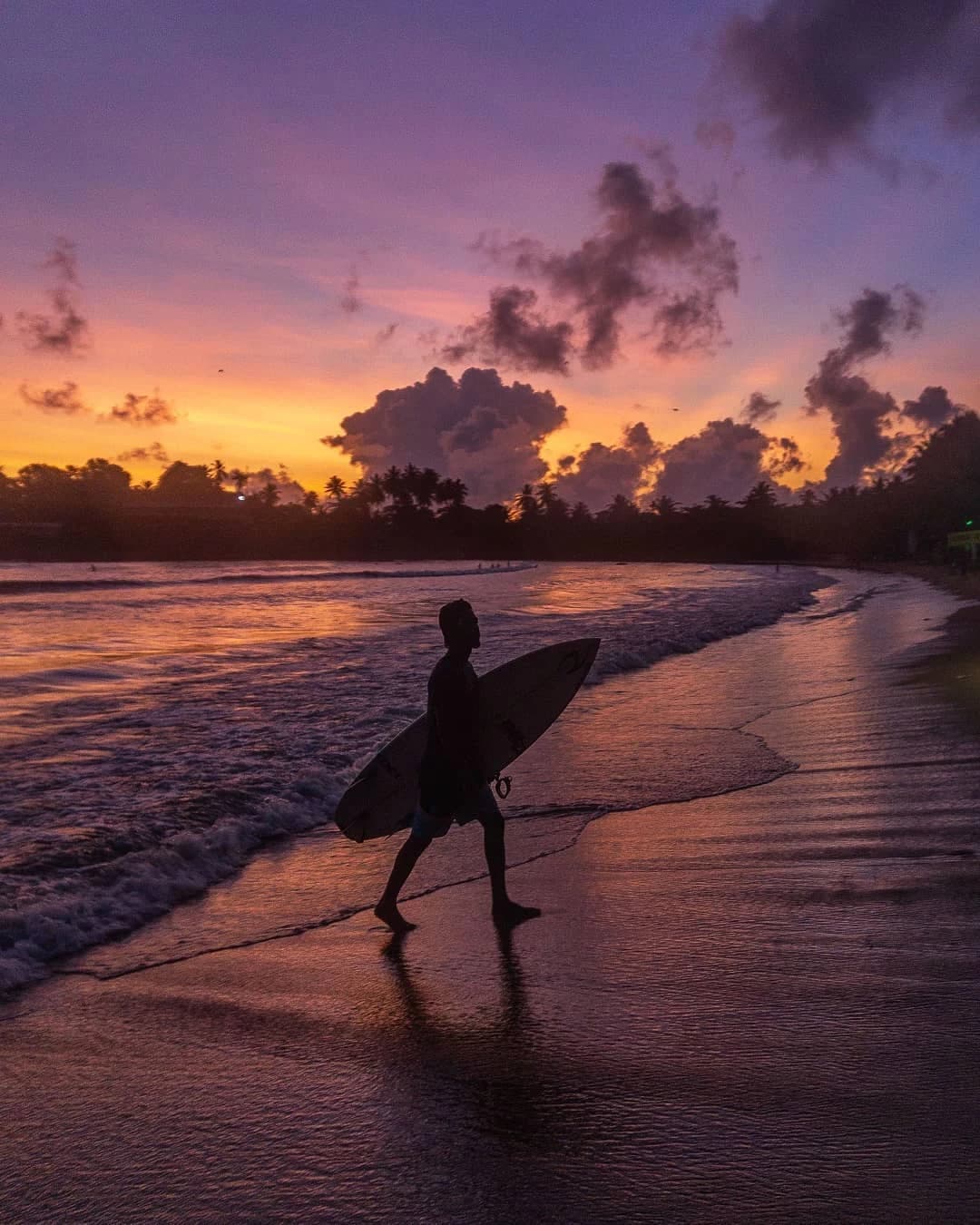

If there is one place on our island where you can pick up a board for the very first time and actually stand up before the day is out, it’s Weligama. Tucked along the sun-soaked south coast, Weligama Bay is the gentle, forgiving classroom where thousands of travellers catch their first wave every season. The name itself means “sandy village,” and that sandy bottom is exactly why this wide, curving bay has become the undisputed home of beginner surfing in Sri Lanka. If you’ve been dreaming of trading your office chair for a longboard, this is where your story begins.
We’ve put together everything you need to know before you paddle out, from the best season to surf schools, where to stay, and how to get here. Surf’s up!
Why Weligama Is Perfect for Beginners
Most surf spots in Sri Lanka break over reef, which is wonderful for seasoned surfers chasing a clean wall but rather unforgiving on bare shins. Weligama is different. This is a true beach break with a soft, sandy bottom, which means that when you inevitably tumble off your board (and you will, that’s half the fun), you land on forgiving sand rather than sharp coral.
The bay is wide and shallow, with waves that roll in slow and mellow rather than crashing down hard. You can stand waist-deep, wait for a gentle white-water wave to push you along, and practise popping to your feet without ever being far from the shore. It’s about as low-stress as surfing gets, which is precisely why instructors love teaching here and why first-timers leave grinning from ear to ear.
For a wider look at how Weligama fits into the island’s surf scene, have a read of our guide to the best surf spots in Sri Lanka, which maps out every coast and skill level.
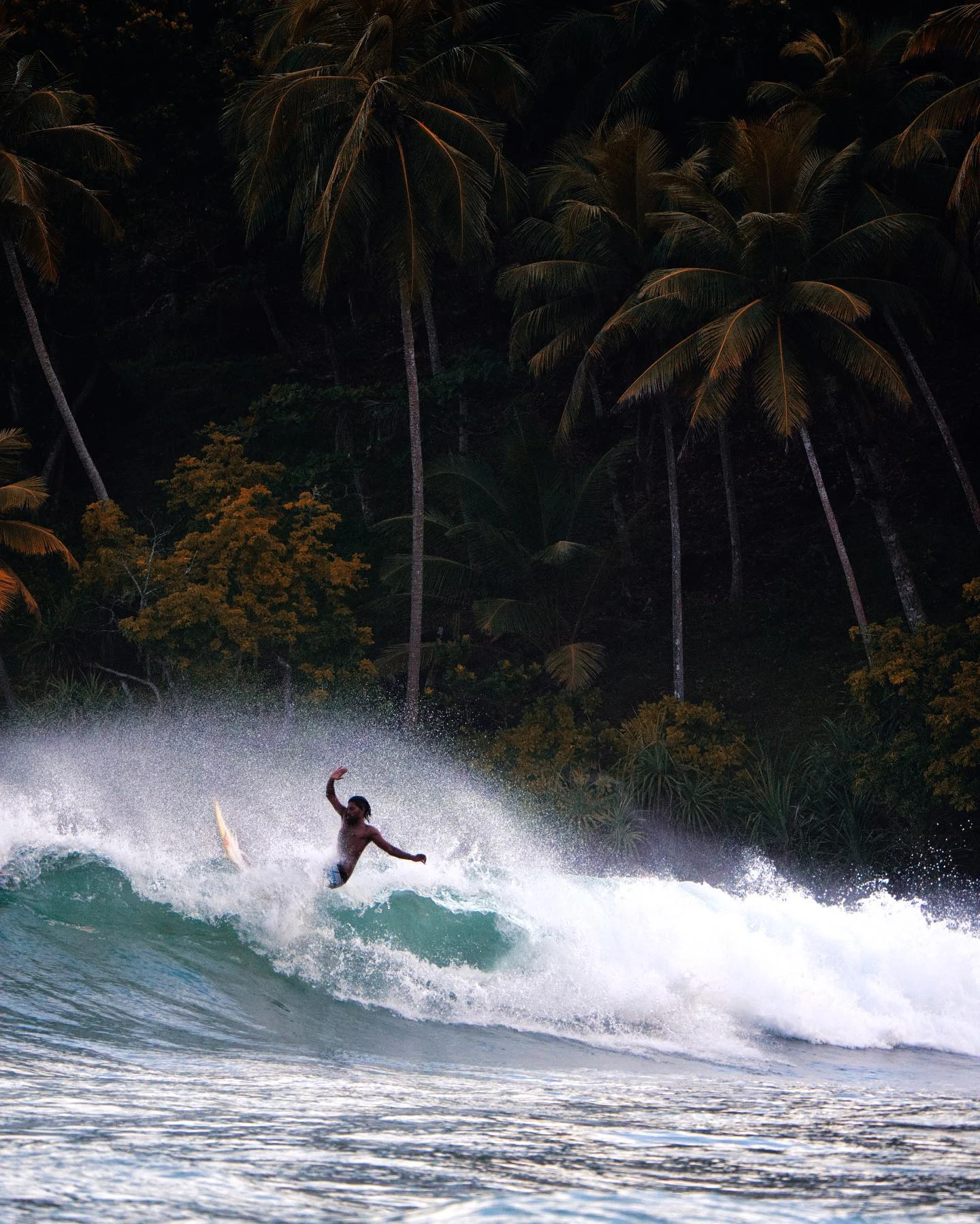 Photo by Ward Jonkman on Instagram.
When to Surf: The South Coast Season
Timing matters, and the south coast keeps its own calendar. The prime surf season here runs from November to April, when the monsoon swings around and gifts the southern beaches clean, consistent swell and bright, dry days. This is when Weligama is at its liveliest, the water at its clearest, and the waves at their most reliable for learning.
Outside of these months, from roughly May to October, the southwest monsoon brings choppier conditions and more rain to this coast, and many surfers migrate over to the east coast around Arugam Bay instead. You can still surf Weligama in the shoulder months on calmer days, but for the smoothest beginner experience, aim for that November-to-April window.
Surf Schools, Lessons & Board Rentals
Walk along Weligama Bay and you’ll lose count of the surf schools lining the sand. This is one of the most surf-saturated stretches in the whole country, which is great news for beginners: lessons are plentiful, instructors are experienced, and there’s no shortage of soft-top foam boards perfect for learning.
Here’s what to expect:
-
Lessons: Most schools offer group or private lessons, usually starting on the beach with a quick rundown of paddling, popping up, and ocean safety before you head into the water with an instructor close by. Group sessions are sociable and budget-friendly; private lessons get you faster, more personal feedback.
-
Board rental: If you’ve already found your feet, you can simply rent a board by the hour or day. Soft-top longboards are ideal for beginners, while more confident surfers will find shortboards and funboards available too.
-
Surf camps: Many spots double as surf camps, bundling accommodation, daily lessons, board hire, and sometimes yoga into a week-long package. These are brilliant if you want to commit and improve quickly.
A friendly tip from us: prices vary from school to school and shift with the season, so it pays to walk the beach, chat to a few instructors, and choose the one whose vibe feels right. Don’t be shy about asking how many students they take per instructor, as smaller groups mean more waves for you.
Where to Stay in Weligama
Weligama has blossomed into a proper surf town, with accommodation for every budget sitting just steps from the sand. Backpackers and solo travellers gravitate toward the buzzing hostels and surf camps right on the bay, where you’ll meet fellow first-timers over breakfast and swap wave stories at sunset.
If you’d rather something quieter, there are charming guesthouses and boutique villas tucked into the lanes behind the beach, plus a few smart hotels for those wanting a touch more comfort after a day of paddling. Staying close to the bay means you can roll out of bed, grab a board, and be in the water before the crowds arrive for the morning session, which is honestly the best way to do it.
Getting to Weligama
Weligama sits comfortably on Sri Lanka’s south coast, and it’s wonderfully easy to reach.
-
From Galle: It’s only about a 30-minute drive east along the coastal road, making Weligama an easy add-on to any southern itinerary.
-
From Colombo: The Southern Expressway gets you most of the way quickly; expect around two and a half to three hours by car or private transfer.
-
By train: The scenic coastal railway stops right in Weligama, and rolling past palm-fringed beaches on the slow train is an experience in itself.
-
By bus or tuk tuk: Frequent buses run along the coast, and tuk tuks are perfect for short local hops. For tips on hailing them safely, see our tuk tuk travel guide.
Weligama’s next-door neighbour is the gorgeous Mirissa, just a ten-minute ride down the road, so it’s effortless to base yourself in one and explore both.
Things to Do Around Weligama
Surfing may be the headline act, but there’s plenty to fill your non-wave hours.
-
Whale watching from Mirissa: Between November and April, the waters off nearby Mirissa are among the best places on earth to spot blue whales and dolphins on an early-morning boat trip.
-
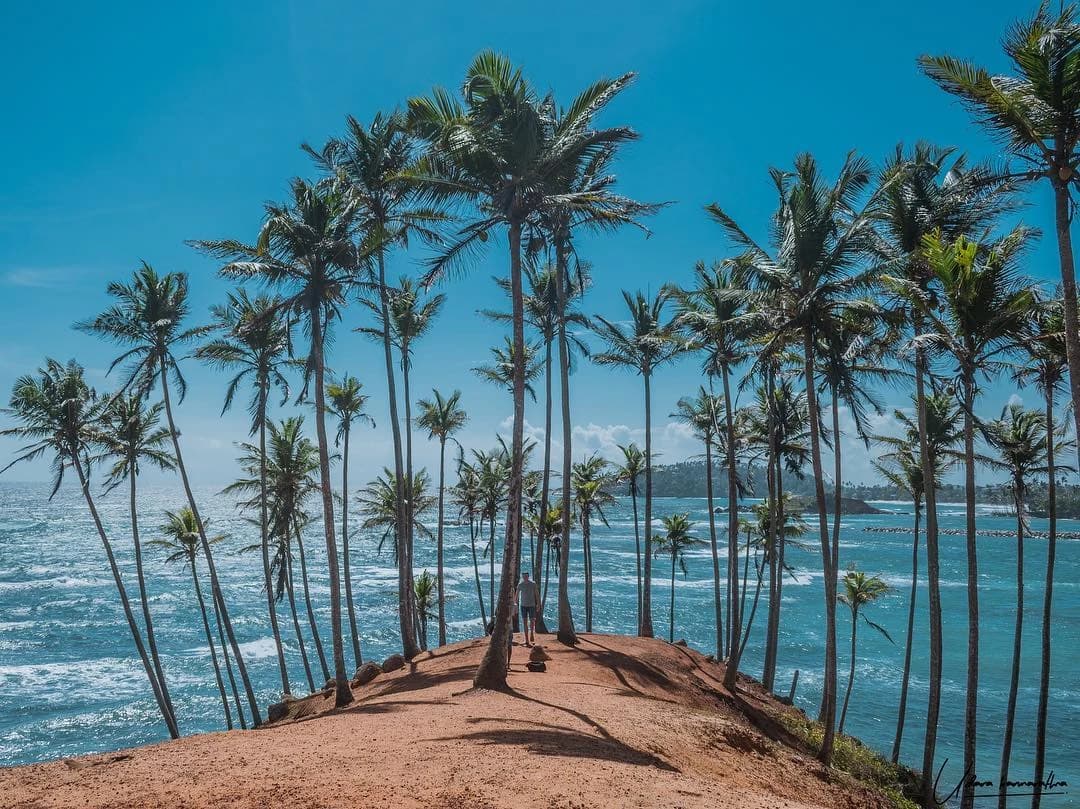
Coconut Tree Hill: This famous palm-crowned headland near Mirissa is one of the south coast’s most photographed sunset spots.
-
Stilt fishermen: Just along the coast toward Koggala, you can watch (and photograph) the iconic stilt fishermen perched above the waves.
-
Galle Fort: The atmospheric, Dutch-built fort city is a half-hour away, packed with boutiques, cafés, and ramparts made for golden-hour strolls.
-
Beach days: When your arms are too tired to paddle, simply sink into the sand. You can find all the details on the bay itself in our guide to Weligama beach.
Surf Etiquette & Safety
Weligama is mellow, but the ocean always deserves respect. A few simple guidelines will keep you and everyone around you safe and smiling:
-
Take a lesson first. Even if you’re sporty and confident, a single proper lesson teaches you how to read the water, where to paddle out, and how to fall safely.
-
Know the rules of the line-up. The surfer closest to the breaking part of the wave has priority, so don’t “drop in” on someone already riding. Wait your turn and share the waves.
-
Hold onto your board. Never ditch your board when others are nearby. A loose board on a leash is a surprisingly heavy thing to take to the head.
-
Mind the current and your limits. Stay within the area your instructor points out, keep an eye on how far you’ve drifted, and paddle back in long before you’re exhausted.
-
Sun and hydration. Tropical sun is no joke. Wear reef-safe sunscreen, a rash guard, and drink plenty of water between sessions.
-
Respect the locals. Many instructors and board renters are local families who’ve surfed this bay their whole lives. A little courtesy and a smile go a long way.
Catch Your First Wave
Weligama is the kind of place that turns curious travellers into lifelong surfers. The gentle, sandy-bottomed beach break, the easy season from November to April, and the dozens of welcoming surf schools all add up to the friendliest introduction to the sport you could ask for. Whether you stand up on your first day or your fifth, you’ll be doing it in warm tropical water with palm trees swaying behind you and good company all around.
So pack a rash guard, leave your nerves on the shore, and come find us in the water. The bay is waiting.