
Trip Highlights
Sri Lanka is one of the most photogenic countries on Earth, packing an extraordinary range of subjects into an island smaller than Ireland. From misty tea plantations and ancient rock fortresses to wild leopards and weathered fishermen balancing on stilts, every turn of the road delivers a new composition. The light here is exceptional -- equatorial golden hours that bathe landscapes in warm amber, dramatic monsoon skies that add depth to any frame, and equatorial starfields that rival the world's best dark-sky locations. This 12-day itinerary is designed specifically for photographers, routing you through Sri Lanka's most compelling locations at the optimal time of day and season for the best possible light.
At a Glance
| Day | Location | Photo Opportunity |
|---|---|---|
| 1 | Colombo → Negombo | Fish market at dawn, harbour life |
| 2 | Negombo → Anuradhapura | Ancient ruins, sacred Bodhi tree |
| 3 | Anuradhapura → Sigiriya | Sigiriya sunrise & sunset from Pidurangala |
| 4 | Sigiriya → Dambulla | Cave temple interiors, Buddha statues |
| 5 | Dambulla → Kandy | Temple of the Tooth, Kandyan dance |
| 6 | Kandy → Nuwara Eliya | Tea plantations, Tamil tea pluckers |
| 7 | Nuwara Eliya → Ella | Train on Nine Arch Bridge, Ella Gap |
| 8 | Ella → Yala | Leopard and wildlife safari |
| 9 | Yala → Mirissa | Whale watching, coastal seascapes |
| 10 | Mirissa → Koggala | Stilt fishermen, beach scenes |
| 11 | Koggala → Galle Fort | Street photography, colonial architecture |
| 12 | Galle → Colombo | Urban photography, departure |
Gear Recommendations
Camera Bodies
- Primary: Full frame mirrorless (Sony A7R V, Nikon Z8, Canon R5 II) for maximum dynamic range and low-light performance
- Backup: A second body saves lens-change time in dusty safari environments -- even an APS-C crop body doubles as a telephoto extender
Lenses
- 16-35mm f/2.8 -- Landscapes at Sigiriya, interiors at Dambulla caves, street photography in Galle Fort
- 24-70mm f/2.8 -- Your workhorse for environmental portraits, temple ceremonies, and general travel
- 70-200mm f/2.8 -- Compressed landscapes, candid portraits of tea workers, and stilt fishermen from a respectful distance
- 100-400mm f/4.5-5.6 (or 200-600mm) -- Essential for Yala wildlife; leopards can be 30-100 metres from the jeep
Accessories
- Carbon fibre travel tripod -- For golden hour landscapes, star trails, and long exposures at waterfalls
- Circular polariser -- Cuts glare on tea leaves, deepens blue skies over Sigiriya, and reveals detail in water
- ND filters (6-stop, 10-stop) -- Smooth water at Ravana Falls, motion blur of passing trains at Nine Arch Bridge
- Drone (DJI Mini 4 Pro or similar) -- Sri Lanka requires Civil Aviation Authority registration; apply online at least 2 weeks before arrival (~$30 fee). Restricted zones include airports, military areas, and national parks. Incredible for Sigiriya aerials and coastline shots
- Sensor cleaning kit -- Dust is inevitable on safari and coastal roads
- Rocket blower and lens cloths -- Humidity and salt air will coat your front elements daily
Storage & Backup Strategy
- Carry at minimum 3 x 128GB CFexpress or SD cards -- rotate daily
- Bring a portable SSD (Samsung T7 or similar) and back up every evening
- Consider a small laptop or tablet with card reader for culling and backup
- Dual card slot cameras should write to both slots simultaneously in the field
Day 1: Negombo - Fish Market & Harbour Documentary
Best Light: Pre-dawn to 7:30 AM, east-facing light illuminating the market stalls. Golden hour around 6:00-6:30 AM.
Morning: Negombo Fish Market (4:30 AM - 8:00 AM)
Arrive at the Lellama fish market before sunrise. The auction begins around 5:00 AM under bare bulbs, creating dramatic chiaroscuro lighting. As dawn breaks, the action spills outdoors where fishermen unload their catch on the sand.
Photography tips:
- Use your 16-35mm to capture wide environmental shots of the bustling market floor
- Switch to 24-70mm for candid portraits -- the fishermen are generally friendly but ask before shooting close-ups
- Shoot at ISO 3200-6400 indoors; the market is dark and fast-moving
- Look for strong compositional lines: rows of tuna, stacked crab baskets, the arc of a cast net
- The wet concrete floor reflects the overhead lights beautifully -- get low for mirror-like compositions
Afternoon: Negombo Lagoon & Dutch Canal
Walk the Dutch Canal for quieter scenes: fishing boats painted in primary colours, egrets on canal banks, and fishermen mending nets.
- Use your polariser to cut glare on the lagoon
- 70-200mm compresses the colourful boat bows into a layered composition
Evening: Negombo Beach Sunset
The west-facing beach delivers reliable sunsets with fishing boats as silhouettes.
Where to Stay
- Budget: Beach Bliss Hostel ($25/night)
- Mid-range: Jetwing Beach ($90/night) -- beachfront, early morning access
- Luxury: Heritance Negombo ($160/night)
Day 2: Anuradhapura - Ancient Ruins & Sacred Light
Best Light: Sunrise at 6:00 AM lights the eastern dagobas with warm side-light. Late afternoon creates long shadows across the ruins.
Distance from Negombo: 170 km (4 hours)
Morning: Transfer & Arrival
Depart early to reach Anuradhapura by late morning. Stop for tea and breakfast en route.
Afternoon: Sacred City (2:00 PM - 6:00 PM)
The ancient capital spans a vast area best explored by bicycle, giving you freedom to chase light.
Key subjects:
-
Ruwanwelisaya Dagoba -- The massive white stupa is best shot at golden hour when it glows amber against deep blue sky. Use 16-35mm from the elephant wall for foreground interest
-
Sri Maha Bodhi -- The sacred fig tree, said to be 2,300 years old. Photograph pilgrims offering flowers; the colourful saris create natural contrast against the grey-green tree. Use 70-200mm from a respectful distance
-
Jetavanaramaya -- The tallest ancient brick structure in the world. At sunset, climb the surrounding platform for a silhouette shot against the sky
-
Moonstone carvings -- Intricate stone semi-circles at temple entrances. Use 24-70mm macro mode or a dedicated macro lens for detail shots
-
Entry fee: $25 USD
-
Tip: Hire a bicycle for $3-5/day to cover the spread-out ruins
Evening: Star Photography (Optional)
Anuradhapura's rural location offers dark skies. Set up your tripod near the ancient tanks for star reflections over water with dagoba silhouettes.
- 16-35mm at f/2.8, ISO 3200, 20-second exposures
- Use a 2-second timer or remote trigger to avoid camera shake
Where to Stay
- Budget: Milano Tourist Rest ($20/night)
- Mid-range: Ulagalla by Uga ($130/night)
- Luxury: The Sanctuary at Tissawewa ($180/night)
Day 3: Sigiriya - The Icon Shot
Best Light: Sunrise (5:45-6:30 AM) from Pidurangala looking east at Sigiriya. Sunset (5:30-6:15 PM) bathes the rock in golden side-light from the west.
Distance from Anuradhapura: 120 km (3 hours)
Morning: Transfer to Sigiriya
Depart after breakfast to arrive by late morning. Check into your hotel and rest before the afternoon.
Afternoon: Sigiriya Rock Fortress (2:00 PM - 5:30 PM)
Climb the rock fortress in the afternoon when the light softens. The mirror wall, lion paw entrance, and summit views are all prime subjects.
- Entry fee: $30 USD
- Shoot the frescoes with 24-70mm at higher ISO -- flash is prohibited
- The summit plateau offers 360-degree panoramic views; stitch a panorama with your 24-70mm
- The lion paw staircase is dramatic with a wide-angle lens from below
Evening: Pidurangala Rock Sunset
The neighbouring rock provides the classic Sigiriya composition -- the fortress framed against the setting sun.
- Entry fee: 500 LKR (~$1.50)
- Arrive at least 45 minutes before sunset to claim your spot on the summit boulder
- Use 70-200mm at 100-150mm to compress Sigiriya against the sky
- Bring your tripod for bracketed exposures -- the dynamic range between the bright sky and shadowed jungle can exceed 8 stops
- Stay after sunset for blue-hour shots when the sky turns purple and village lights flicker on
Where to Stay
- Budget: Back of Beyond Pidurangala ($30/night)
- Mid-range: Kassapa Lions Rock ($80/night)
- Luxury: Jetwing Vil Uyana ($200/night) -- set in wetlands, great for morning bird photography
Day 4: Dambulla - Cave Temple Interiors
Best Light: The caves face south and are interior-lit, so time of day matters less. Morning offers fewer crowds (arrive at 7:30 AM opening). Late afternoon light filters into the cave entrances for atmospheric rays.
Distance from Sigiriya: 17 km (30 minutes)
Morning: Dambulla Royal Cave Temple (7:30 AM - 10:00 AM)
Five caves containing over 150 Buddha statues and 2,100 square metres of painted murals dating back to the 1st century BC.
Photography tips:
-
No flash -- use high ISO (3200-6400) and wide apertures
-
A fast prime like a 35mm f/1.4 excels here
-
Look for the reclining Buddha in Cave 1 (14 metres long) -- shoot from the feet with 16-35mm for dramatic perspective
-
The painted ceilings are extraordinary; lie on your back and shoot upward
-
Use the cave entrances as natural frames -- silhouette pilgrims against the bright exterior
-
Incense smoke catches light beams filtering through doorways in the early morning
-
Entry fee: 1500 LKR (~$4.50)
-
Dress code: Cover shoulders and knees -- bring a scarf in your camera bag
Afternoon: Dambulla Wholesale Market & Village Life
The nearby vegetable market offers vibrant colour and character for street photography.
- Mountains of red chilies, golden turmeric, and green bananas create natural colour palettes
- Vendors are accustomed to cameras and often happy to pose
Evening: Golden Temple Exterior
Photograph the large golden Buddha statue at the base of Dambulla Rock as the afternoon light catches its gilded surface.
Where to Stay
- Budget: Sundaras Resort ($25/night)
- Mid-range: Heritance Kandalama ($130/night) -- Geoffrey Bawa architecture, incredible views
- Luxury: Amaya Lake ($150/night)
Day 5: Kandy - Temples, Ceremony & Dance
Best Light: Evening puja at the Temple of the Tooth creates atmospheric indoor lighting with oil lamps. Kandy Lake reflects golden light at sunset (5:30 PM).
Distance from Dambulla: 75 km (2.5 hours)
Morning: Transfer to Kandy
Drive through spice country, stopping at villages and roadside scenes along the way.
Afternoon: Kandy Lake & Town (2:00 PM - 5:00 PM)
Walk the lakefront, photograph the colonial-era town centre, and explore the bustling market area.
- The lake's still surface creates mirror reflections of the Temple of the Tooth -- use 70-200mm from the south shore
- The central market offers colourful produce stalls and character portraits
Evening: Temple of the Tooth Puja Ceremony (6:30 PM)
This is one of Sri Lanka's most atmospheric photographic opportunities.
- Entry fee: 2000 LKR (~$6)
- The evening puja starts at 6:30 PM; arrive 30 minutes early to position yourself
- Drummers perform outside the shrine -- capture motion blur at 1/15s while panning
- Inside, oil lamps cast warm amber light on devotees offering lotus flowers
- Use 24-70mm at f/2.8, ISO 3200-6400; no flash permitted
- Be respectful: do not stand in front of worshippers or block their path to the shrine
Late Evening: Kandyan Dance Performance
Traditional dance performances run nightly at the Kandy Lake Club or Cultural Centre (~$10 entry). Fire dancers and acrobatic performers make dramatic subjects.
- Use burst mode for fire breathing and spinning sequences
- 1/500s minimum shutter speed to freeze fire trails, or 1/30s for intentional blur
Where to Stay
- Budget: Freedom Lodge ($25/night)
- Mid-range: Theva Residency ($90/night) -- hilltop with panoramic views
- Luxury: Earl's Regency ($150/night)
Day 6: Nuwara Eliya - Tea Country Portraits
Best Light: Early morning mist burns off around 8:30 AM, creating ethereal atmosphere over tea fields. Overcast days are ideal for even lighting on portraits of tea pluckers.
Distance from Kandy: 80 km (3 hours via Ramboda)
Morning: Scenic Drive Through Tea Country
The road from Kandy to Nuwara Eliya climbs through some of the most photogenic landscape in Asia.
- Stop at Ramboda Falls (roadside, easy access) for a long-exposure waterfall shot
- Use 6-stop ND filter, ISO 100, f/11, 1-2 second exposure
- The misty valleys en route are stunning -- pull over whenever visibility opens
Afternoon: Tea Plantation Portraits (2:00 PM - 5:00 PM)
Visit a working estate like Pedro Tea Factory or Mackwoods to photograph Tamil tea pluckers at work.
Photography tips:
-
Always ask permission before photographing workers -- most are happy to pose for a small tip (200-500 LKR)
-
The bright green tea bushes against colourful saris create stunning environmental portraits
-
Use 70-200mm at f/2.8 for shallow depth of field, isolating the worker against a sea of green
-
Overcast light is actually preferable here -- harsh sun creates unflattering shadows on faces
-
Capture detail shots: weathered hands picking leaves, baskets overflowing with tea, the red soil between rows
-
Visit the factory interior for documentary shots of the withering, rolling, and drying process
-
Tea factory tour: 500-1000 LKR (~$1.50-3)
Evening: Horton Plains Star Trails (Optional, if staying nearby)
Horton Plains National Park at 2,100m elevation offers excellent dark skies.
- Set up at World's End viewpoint for star trails over the escarpment
- 30-second exposures stacked over 1-2 hours using an intervalometer
- Entry to Horton Plains: $20 USD; gates open at 6:00 AM for sunrise shoots
Where to Stay
- Budget: Single Tree Hotel ($30/night)
- Mid-range: Heritance Tea Factory ($120/night) -- a converted tea factory with stunning views
- Luxury: Grand Hotel ($150/night)
Day 7: Ella - The Nine Arch Bridge
Best Light: Morning golden hour lights the Nine Arch Bridge from the east (6:00-7:30 AM). The train crosses at approximately 6:45 AM and 9:20 AM.
Distance from Nuwara Eliya: 60 km (2.5 hours by road, or take the scenic train)
Morning: Nine Arch Bridge at Dawn (5:30 AM - 9:30 AM)
This is the single most photographed location in Sri Lanka and requires careful planning.
The positioning spot: From the Demodara Loop road, take the well-marked trail to the hillside viewpoint above the bridge. Arrive by 5:45 AM to secure the best angle -- the spot looking slightly down at the bridge from the northwest gives you the classic composition with the arches, jungle backdrop, and approaching train.
Train timing:
- The 6:45 AM train from Ella crosses heading south -- front-lit in morning golden hour
- The 9:20 AM train heading north crosses in harsher light but gives a second chance
- Check locally the night before, as trains can run 30-60 minutes late
Settings:
- 70-200mm at 100-135mm frames the bridge perfectly from the main viewpoint
- Pre-focus on the bridge and switch to manual focus so AF does not hunt
- Shoot at 1/1000s to freeze the train, or 1/30s with panning for motion blur
- Bracket exposures: the jungle canopy is dark while the sky is bright
- For a long-exposure creative shot, use a 10-stop ND filter and expose for 30 seconds as the train crosses -- it will render as a blue streak across the stone arches
Afternoon: Little Adam's Peak & Tea Estates
The easy hike (45 minutes) through tea plantations offers panoramic views of Ella Gap.
- 16-35mm captures the sweeping valley
- The winding path through tea bushes makes an excellent leading line
Evening: Ella Town & Ravana Falls
Photograph Ravana Falls (roadside access) using a tripod and ND filter for silky water.
Where to Stay
- Budget: Ella Flower Garden Resort ($20/night)
- Mid-range: 98 Acres Resort ($100/night) -- perched on a tea estate with epic views
- Luxury: Ella Jungle Resort ($180/night)
Day 8: Yala National Park - Leopard Safari
Best Light: First light at 5:30 AM is magical -- amber side-light through the scrub jungle. The hour before park closing (5:30-6:00 PM) often produces the best leopard activity and golden light.
Distance from Ella: 130 km (3 hours)
Morning: Dawn Safari (5:00 AM - 11:00 AM)
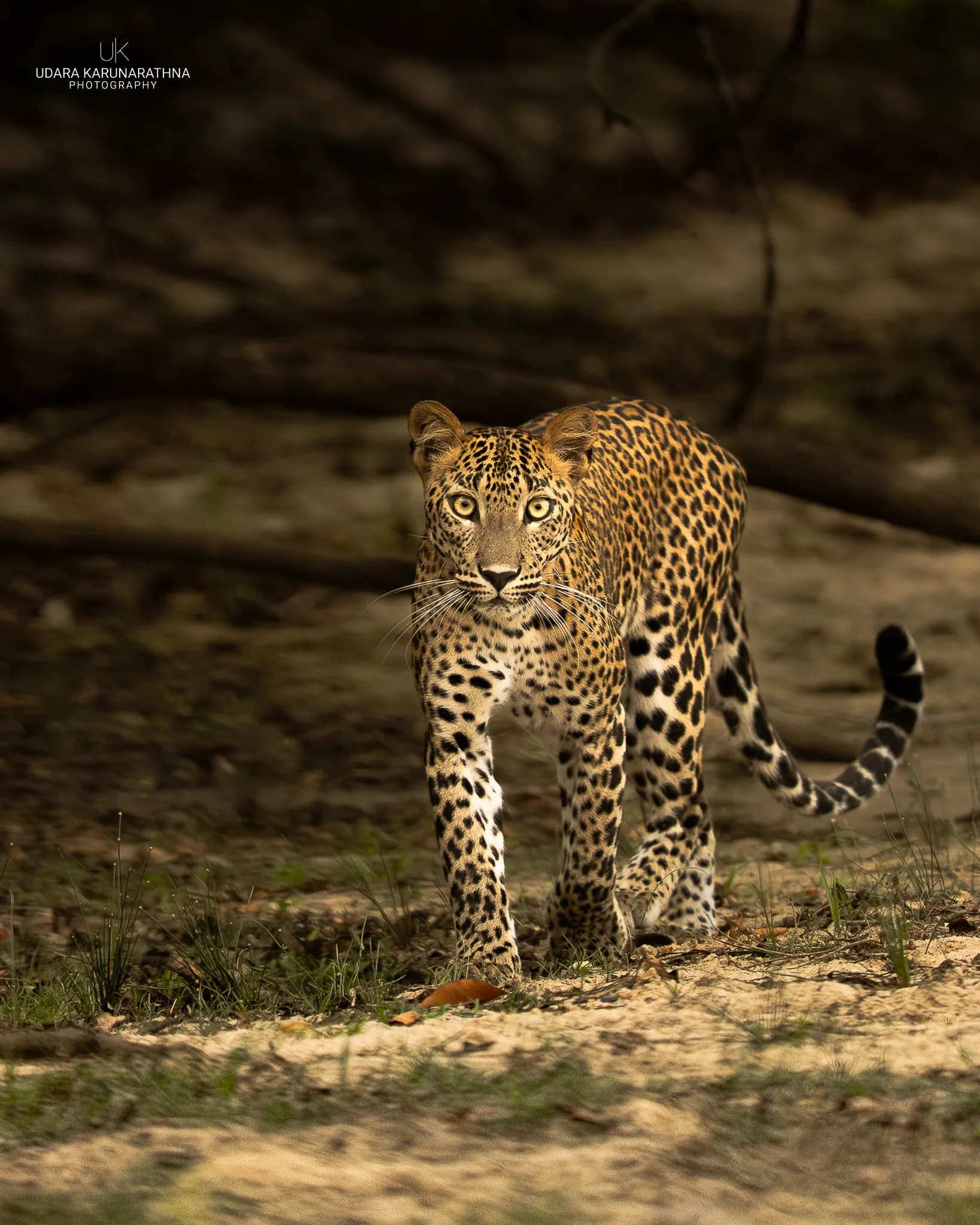
Enter the park at gate opening (5:30 AM) for the best chance at leopard photography. The Sri Lankan leopard is the apex predator here, and Yala has the highest density of leopards in the world.
Wildlife photography settings:
- 100-400mm or 200-600mm is essential -- leopards can be 30-150 metres from the track
- Shoot in aperture priority at f/5.6-f/8 for sharpness, letting ISO float (auto ISO up to 6400)
- Minimum shutter speed: 1/1000s for static animals, 1/2000s for action
- Use continuous autofocus (AF-C) with animal eye-detect if your camera supports it
- Shoot in bursts -- leopards move unpredictably and facial expressions change in an instant
Composition tips:
- Wait for eye contact -- a leopard looking directly at the lens is the defining shot
- Include habitat: a leopard on a rocky outcrop with scrub jungle behind tells a story
- Shoot birds and smaller wildlife while waiting -- painted storks, bee-eaters, and monitor lizards are plentiful
- The lakes in Yala attract elephants, crocodiles, and wading birds at midday
Afternoon Safari (2:30 PM - 6:00 PM)
Return for the evening drive when leopards often emerge to patrol territories.
- Safari cost: $50-80 per person (jeep hire, tracker, park fees)
- Park entrance: $15 USD for foreigners
- Tip: Request Block 1 for leopard density, or Block 5 for fewer crowds and more diverse landscapes
- Important: Drones are strictly prohibited inside all national parks
Where to Stay
- Budget: Yala Leopard Lodge ($60/night)
- Mid-range: Cinnamon Wild Yala ($120/night)
- Luxury: Wild Coast Tented Lodge ($500/night) -- cocoon-shaped tents overlooking the Indian Ocean
Day 9: Mirissa - Whale Watching & Coastal Seascapes
Best Light: Pre-dawn blues on the ocean (5:30-6:15 AM). Sunset over the Indian Ocean from Parrot Rock (5:45-6:15 PM).
Distance from Yala: 130 km (3 hours)
Early Morning: Blue Whale Safari (6:00 AM - 11:00 AM)
Mirissa is one of the best places on Earth to photograph blue whales between November and April.
Whale photography tips:
-
100-400mm is ideal; whales surface 50-200 metres from the boat
-
Shutter speed: 1/2000s minimum -- the boat is moving and so is the whale
-
Continuous burst mode; the tail fluke dive lasts only 2-3 seconds
-
Pre-focus on the area where the whale last surfaced -- they often re-emerge nearby
-
Protect your gear: bring a waterproof bag and keep a cloth handy for salt spray
-
Spinner dolphins often ride the bow wave -- switch to 24-70mm for close encounters
-
Cost: $50-60 per person
-
Season: November to April only
-
Tip: Choose a boat operator that follows responsible whale-watching guidelines (maintains 100m distance)
Afternoon: Mirissa Beach & Coconut Tree Hill
Rest, review images, and back up your cards. In the late afternoon, visit Coconut Tree Hill for the iconic palm-lined clifftop photo.
Evening: Parrot Rock Sunset
The rocky headland at the end of Mirissa Beach is the perfect sunset viewpoint. Use foreground rocks for compositional anchors.
Where to Stay
- Budget: Paradise Beach Club ($30/night)
- Mid-range: Mandara Resort ($80/night)
- Luxury: Lantern Boutique Hotel ($150/night)
Day 10: Koggala - Stilt Fishermen
Best Light: Dawn (5:45-6:30 AM) produces the most atmospheric light for stilt fishermen shots, with the sun rising over the ocean behind them.
Distance from Mirissa: 20 km (30 minutes)
Morning: Stilt Fishermen at Dawn (5:30 AM - 8:00 AM)
The iconic image of Sri Lanka -- fishermen perched on wooden stilts in the shallows.
The reality check:
- Traditional stilt fishing has largely declined as a livelihood. Most fishermen along the Koggala-Weligama coast now pose for tourists for a fee
- Expect to pay: 2000-5000 LKR ($6-15) per fisherman for a posing session. Negotiate before they mount the stilts
- This is a legitimate exchange -- they earn more posing than fishing -- but it is important to understand the context
- For authentic stilt fishing, visit very early (before 6:00 AM) when a handful of genuine fishermen still work the waters
Photography tips:
- Position yourself in the water (wear board shorts and water shoes) for a low angle that includes the reflection
- 70-200mm at 135-200mm compresses multiple fishermen on their stilts into a layered composition
- Silhouette shots against the sunrise are the most striking -- expose for the sky and let the fishermen go dark
- Use a fast shutter speed (1/1000s+) if waves are present, or slow down for motion-blur water effect with an ND filter
- A drone shot from directly above reveals the geometric pattern of the stilts in the water (check local drone restrictions first)
Afternoon: Koggala Lake & Martin Wickramasinghe Museum
Explore the lake by boat -- photograph kingfishers, cinnamon islands, and temple islands.
Evening: Beach Scenes
The south coast beaches between Koggala and Unawatuna offer rock formations, fishing boats, and tide pools for creative compositions.
Where to Stay
- Budget: Why House Koggala ($35/night)
- Mid-range: The Fortress Resort ($140/night)
- Luxury: Amanwella ($400/night) -- stunning Geoffrey Bawa-designed resort
Day 11: Galle Fort - Street Photography & Architecture
Best Light: Sunrise (5:45-6:15 AM) paints the eastern ramparts in warm light with minimal tourists. Golden hour (5:00-6:00 PM) along the western sea-facing walls is equally stunning.
Distance from Koggala: 15 km (20 minutes)
Morning: Fort Walls at Sunrise (5:30 AM - 8:00 AM)
Walk the ramparts in the early morning for the best light and empty streets.
- The lighthouse at dawn with the first fishermen below is a classic composition
- The clock tower and rampart walkway catch warm eastern light
- Stray dogs sleeping on the walls add character to wide-angle compositions
Morning/Afternoon: Street Photography (8:00 AM - 4:00 PM)
Galle Fort's grid of narrow streets, colonial Dutch architecture, and vibrant daily life make it one of the best street photography locations in South Asia.
Key locations:
- Pedlar Street -- Boutique shops with colourful facades, ideal for leading-line compositions
- Leyn Baan Street -- The most photographed residential lane with crumbling colonial walls and bougainvillea
- Dutch Reformed Church -- The interior with streaming window light creates a Vermeer-like atmosphere
- Muslim quarter -- The Meeran Jumma Mosque and surrounding streets offer a different visual culture
- Cricket on the ramparts -- Local boys play cricket on the grassy expanse inside the fort walls; use 70-200mm for action shots
Street photography tips:
- Use 24-70mm or a 35mm prime for versatility in narrow streets
- Shoot from the hip for candid moments -- a tilting screen helps
- The combination of Dutch colonial, British, and Sri Lankan architecture creates fascinating visual juxtapositions
- Look for shadows, doorways, and colour contrasts -- the fort's palette of terracotta, white, and ocean blue is naturally harmonious
Evening: Golden Hour on the Ramparts (5:00 PM - 6:15 PM)
Return to the western walls for sunset over the Indian Ocean. The Flag Rock bastion offers unobstructed views.
- Fishermen casting from the rocks below the walls provide human scale
- Use a 10-stop ND for 30-second exposures that smooth the crashing waves into mist
Where to Stay
- Budget: A Tuk Tuk Hostel ($20/night)
- Mid-range: Fort Bazaar ($130/night) -- boutique hotel inside the fort
- Luxury: Amangalla ($350/night) -- the finest heritage hotel in Sri Lanka
Day 12: Colombo - Urban Photography & Departure
Best Light: Early morning (6:00-7:30 AM) in Pettah Market for directional light through the market stalls. Late afternoon (4:00-5:30 PM) along the Galle Face promenade.
Distance from Galle: 130 km (2.5 hours via Southern Expressway)
Morning: Pettah Market (6:00 AM - 9:00 AM)
Colombo's chaotic commercial district is a street photographer's dream.
- Narrow lanes overflowing with textiles, electronics, spices, and produce
- Use 24-70mm for fast-moving market scenes
- The fruit and flower vendors along Main Street offer vivid colour
- Tuk-tuks weaving through pedestrians create dynamic motion compositions
Late Morning: Gangaramaya Temple & Beira Lake
One of Colombo's most photogenic temples, mixing Buddhist, Thai, Indian, and Chinese architecture.
- Entry fee: Free (donations welcome)
- The Seema Malaka floating temple on Beira Lake is particularly striking at any time of day
Afternoon: Galle Face Green & Departure Prep
Sri Lanka's most famous urban promenade comes alive in the late afternoon.
- Kite flyers, cotton candy vendors, and families create a lively street scene
- The seafront promenade facing west offers sunset over the Indian Ocean as a final shot
- Distance to airport: 35 km (1-1.5 hours depending on traffic). Allow extra time during rush hour
Where to Stay (if staying overnight)
- Budget: Colombo City Hostel ($20/night)
- Mid-range: Cinnamon Red ($70/night)
- Luxury: Shangri-La Colombo ($200/night)
Photography Budget Breakdown
| Category | Budget | Mid-Range | Luxury |
|---|---|---|---|
| Accommodation (11 nights) | $300-350 | $1100-1300 | $2500+ |
| Transport (12 days, private driver) | $550-650 | $600-750 | $750-900 |
| Entrance fees | $120-140 | $120-140 | $120-140 |
| Safari (Yala) | $50-80 | $50-80 | $50-80 |
| Whale watching | $50-60 | $50-60 | $50-60 |
| Stilt fishermen tips | $10-20 | $10-20 | $10-20 |
| Food | $120-180 | $250-350 | $500+ |
| Drone permit (optional) | $30 | $30 | $30 |
| Total per person | $1230-1510 | $2210-2730 | $4010+ |
Essential Photography Tips for Sri Lanka
Light & Timing
- Golden hour: Approximately 5:45-6:30 AM and 5:15-6:00 PM year-round (Sri Lanka is close to the equator)
- Blue hour: 15-20 minutes before sunrise and after sunset
- The midday sun is extremely harsh from 10:00 AM to 3:00 PM -- use this time for interior shots, editing, and backup
- Overcast days are ideal for portraits and jungle scenes (eliminates harsh shadows)
Cultural Sensitivity
- Always ask permission before photographing people, especially at religious sites
- Remove hats and shoes in temples; never pose with your back to a Buddha statue
- Dress modestly at religious sites: cover shoulders, knees, and midriff
- Monks can be photographed but ask first; never touch a monk or hand things directly to them
- Offer to show people their photos on your screen -- it builds goodwill and often leads to better portraits
Protecting Your Gear
- Humidity is relentless: store cameras with silica gel packets overnight
- Carry a rain cover or large ziplock bag for sudden tropical downpours
- Salt spray on the coast will corrode contacts -- wipe lenses and bodies with a damp cloth nightly
- Dust on safari roads gets into everything -- change lenses inside a large dry bag when possible
Best Months for This Itinerary
- December to March -- Dry season on the west and south coasts; whale watching active; clear skies for landscapes
- February to July -- Peak leopard viewing at Yala (dry season drives animals to water holes)
- Avoid September-October -- Inter-monsoon rains can disrupt travel across all regions
Related Itineraries: